
Aerospace
Precision Weighing and Force Measurement for Flight and Space Systems
Accurate weight and force measurement is fundamental to aerospace engineering, manufacturing, testing, maintenance, and ground operations. From aircraft weight and balance verification to structural fatigue testing and rocket engine thrust measurement, reliable sensor data supports performance analysis, validation, safety, and mission readiness.
ANYLOAD provides standard and custom load cells, force transducers, torque sensors, multi-axis sensors, weighing systems, and instrumentation for aerospace applications. Our engineering and manufacturing capabilities support projects ranging from portable aircraft scales and laboratory test equipment to high-capacity propulsion test stands, launch support structures, and sensors designed for vacuum or extreme-temperature environments.
Why ANYLOAD for Aerospace?
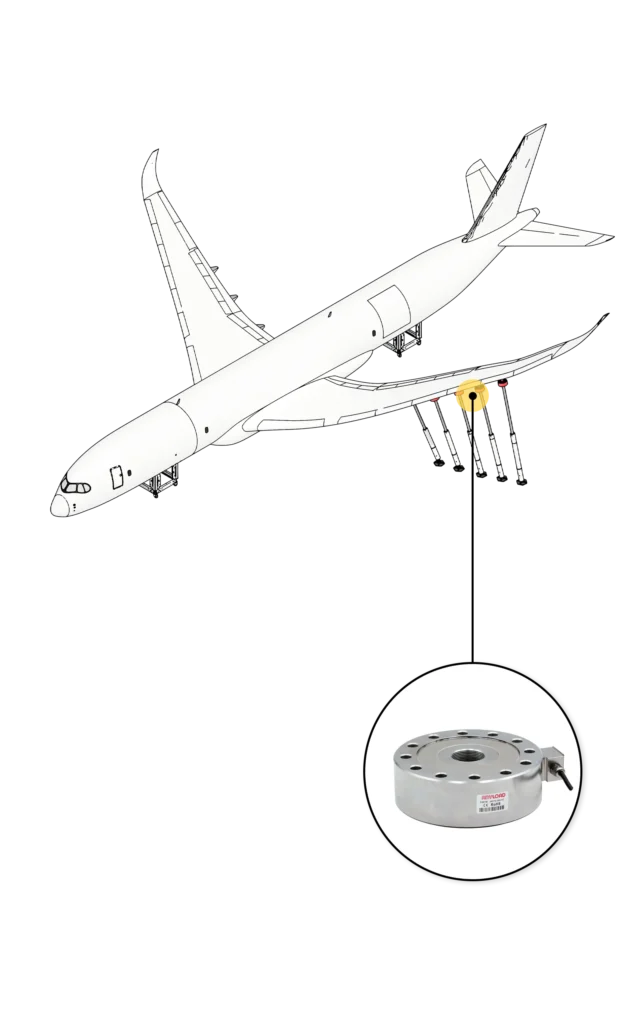
Aircraft Weight & Balance Measurement
Aircraft weight and balance data are used to determine total aircraft weight, individual wheel reaction loads, and center of gravity. Accurate measurements are required during aircraft development, modification, maintenance, equipment changes, and periodic fleet weighing.
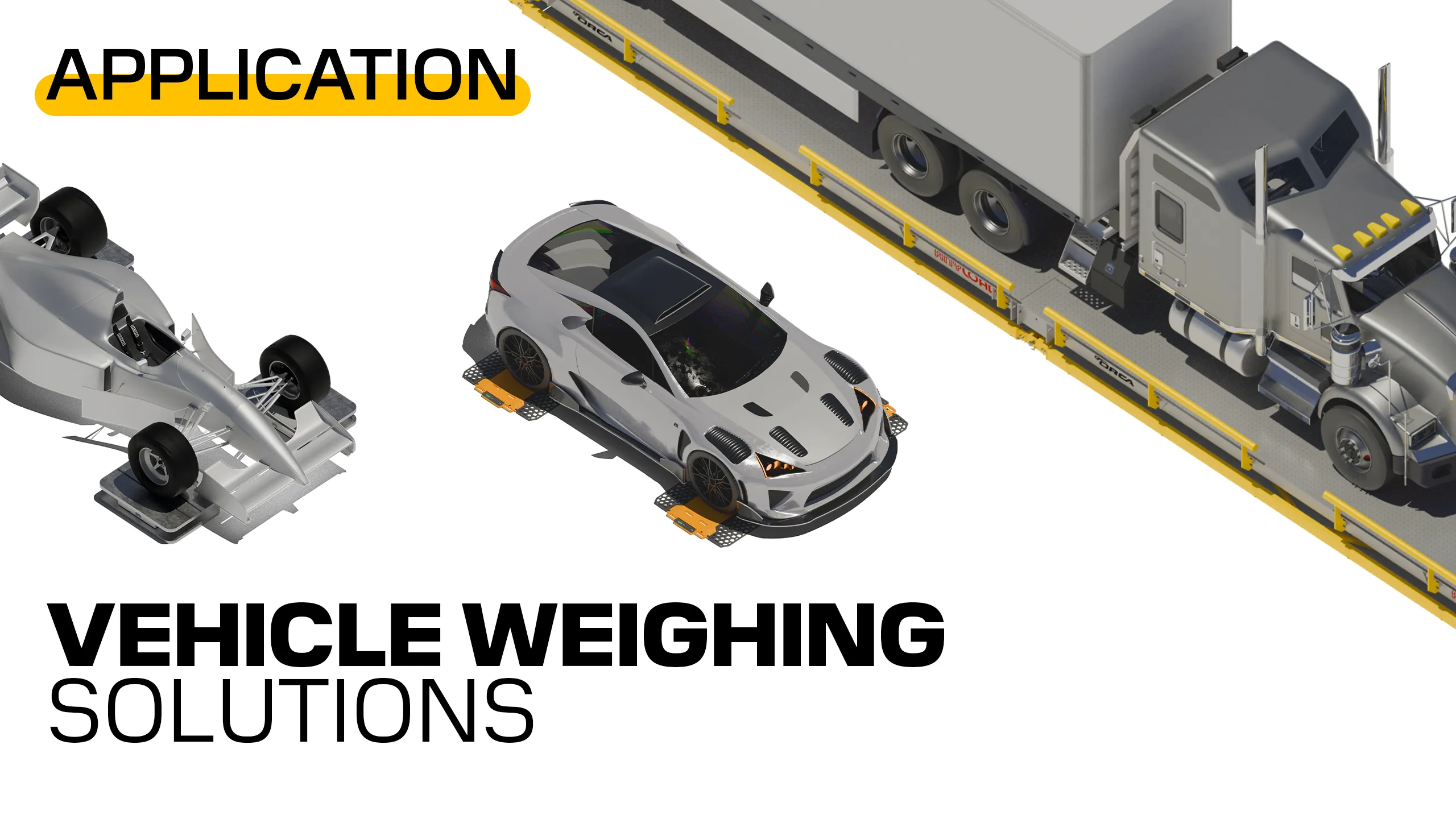
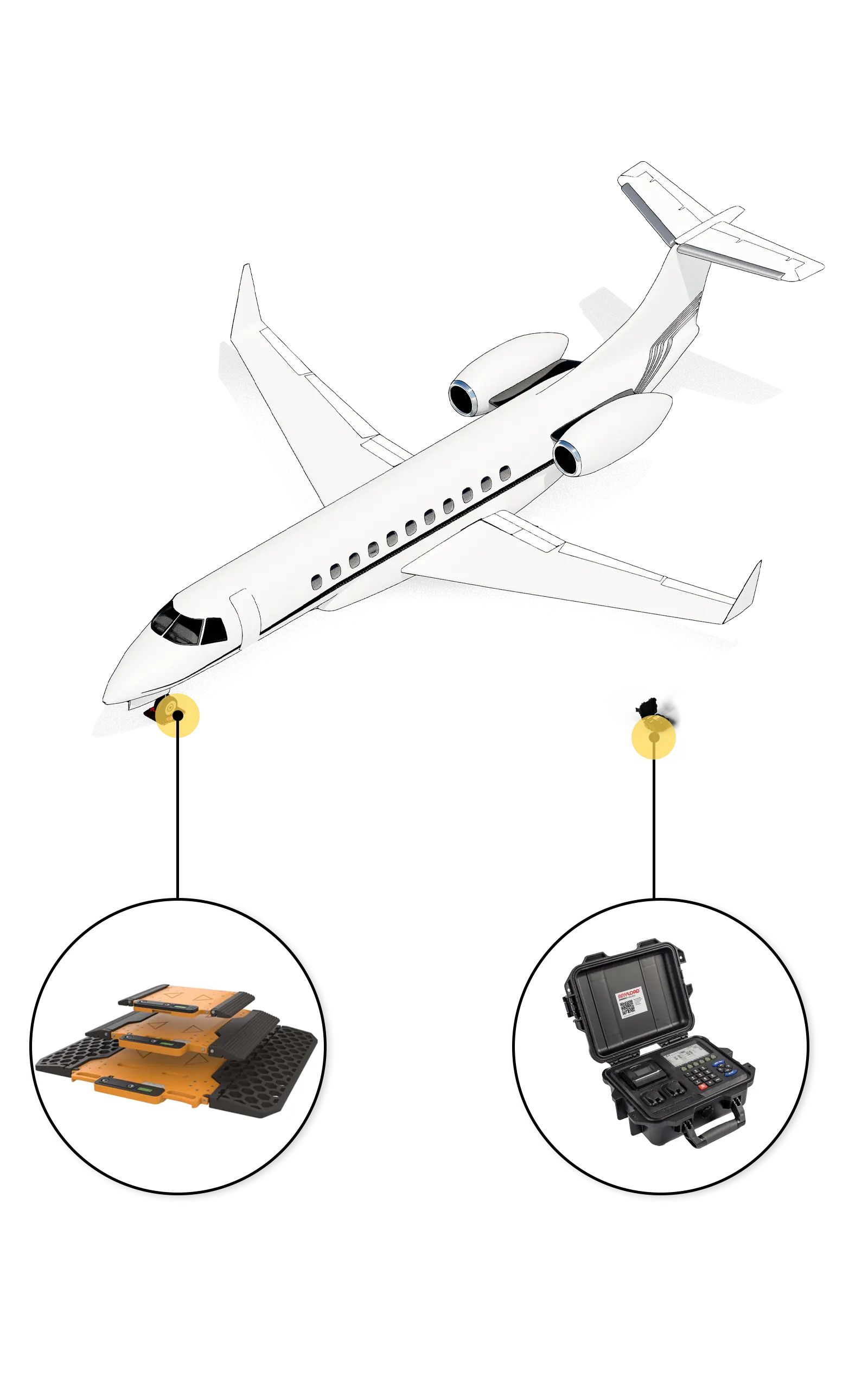
ANYLOAD provides a portable solution: AXA Axle Weight Pads for aircraft weighing systems that can be configured around low-profile wheel pads or load cells integrated into aircraft jacks. Individual measurement channels allow technicians to determine the load at each landing gear position and calculate empty weight center of gravity using the applicable datum and moment arms.
Challenges & Solutions
- Center of Gravity Verification: Accurate measurements at each wheel or jack point provide the reaction forces needed to calculate the total weight, longitudinal center of gravity, and lateral load distribution.
- Low-Profile Wheel Weighing: Portable AXA Axle Weigh Pads allow many aircraft to be towed directly onto the weighing surface. This can reduce setup time and avoid unnecessary high-lift jacking during routine weight and balance procedures.
- Jack Point Integration: Compression load cells can be incorporated into hydraulic aircraft jacks or specialized jack adapters where direct wheel-pad weighing is impractical. Individual readings help confirm balanced lifting and provide weight data at known aircraft reference points.
- Portable Field Deployment: AN560 Portable Wireless Indicators, with battery-powered electronics and rugged portable scales, support aircraft weighing in hangars, maintenance facilities, flight lines, and remote operating locations.
View Products:
Aerospace Structural & Component Testing
Aircraft and spacecraft structures undergo extensive mechanical testing before entering service. Wings, fuselage sections, control surfaces, landing gear, engine mounts, composite panels, and attachment points may be subjected to static loads, repeated fatigue cycles, proof loads, and simulated flight load cases.
Servo-hydraulic actuators commonly apply controlled tension and compression forces to the test article. Load cells installed in-line with each actuator provide closed-loop force feedback and verify that the required load spectrum is applied accurately.
Challenges & Solutions
- Bidirectional Load Measurement: Structural test rigs frequently alternate between tension and compression. Universal load cells provide consistent force measurement in both directions during bending, torsion, shear, and axial load cases.
- High-Cycle Fatigue Testing: Wing and airframe fatigue programs may involve millions of repeated load cycles. Sensors must maintain zero stability, repeatability, and mechanical integrity throughout extended test programs.
- Multi-Point Load Application: Full-scale structural tests may use many synchronized hydraulic actuators. Matched load cells, multi-channel signal conditioning, and stable calibration improve load distribution and closed-loop control.
- Dynamic and Transient Loads: Fast instrumentation captures load spikes, actuator transitions, structural response, and other short-duration events that can be missed by slower weighing electronics.
- Custom Mechanical Integration: Load cells can be designed around restricted mounting envelopes, existing actuator interfaces, unusual load paths, and application-specific capacities. Finite element analysis helps optimize the sensing element for strength, fatigue life, and sensitivity.
View Products:
Engine, Propulsion, and Launch System Testing
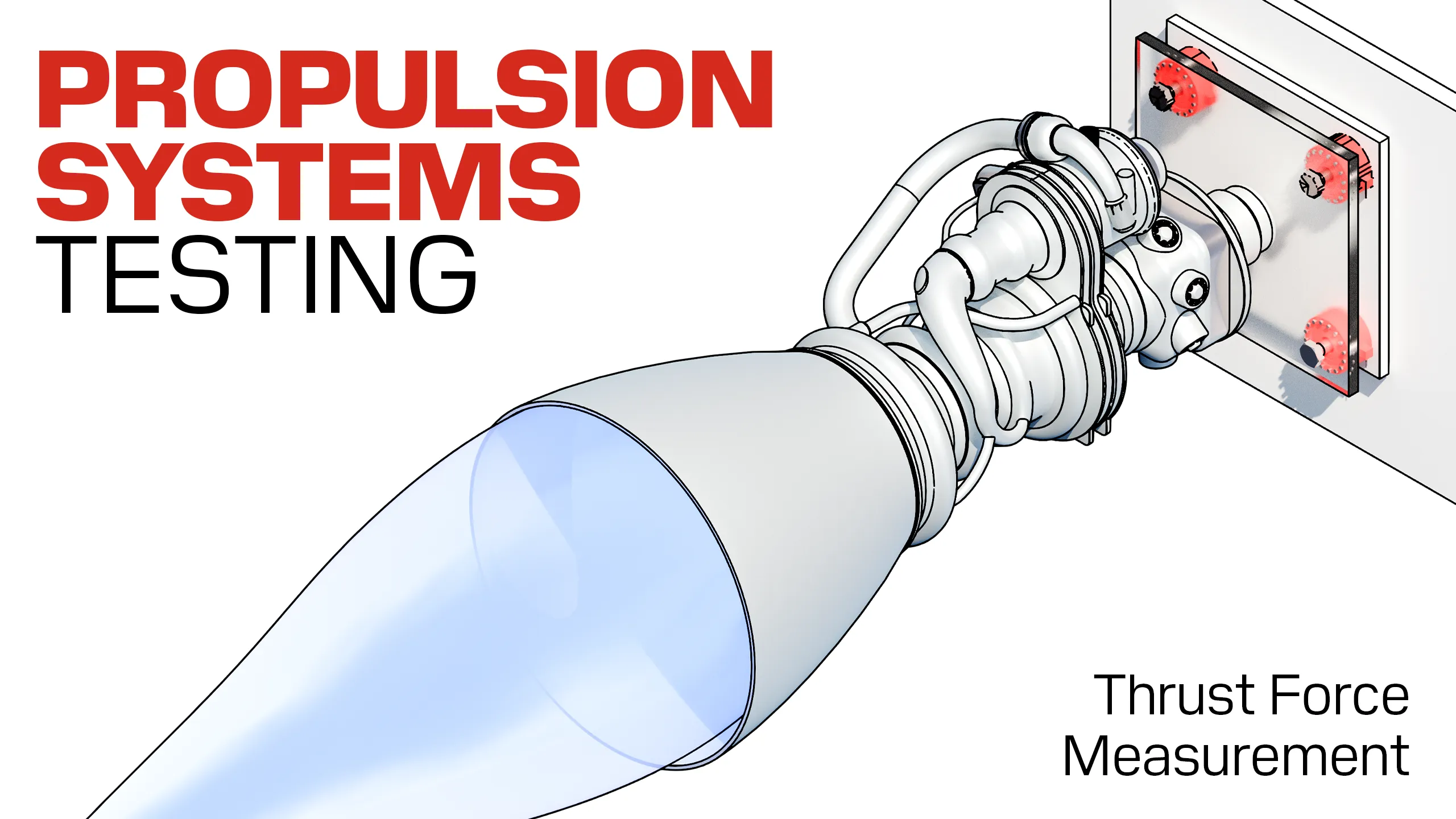
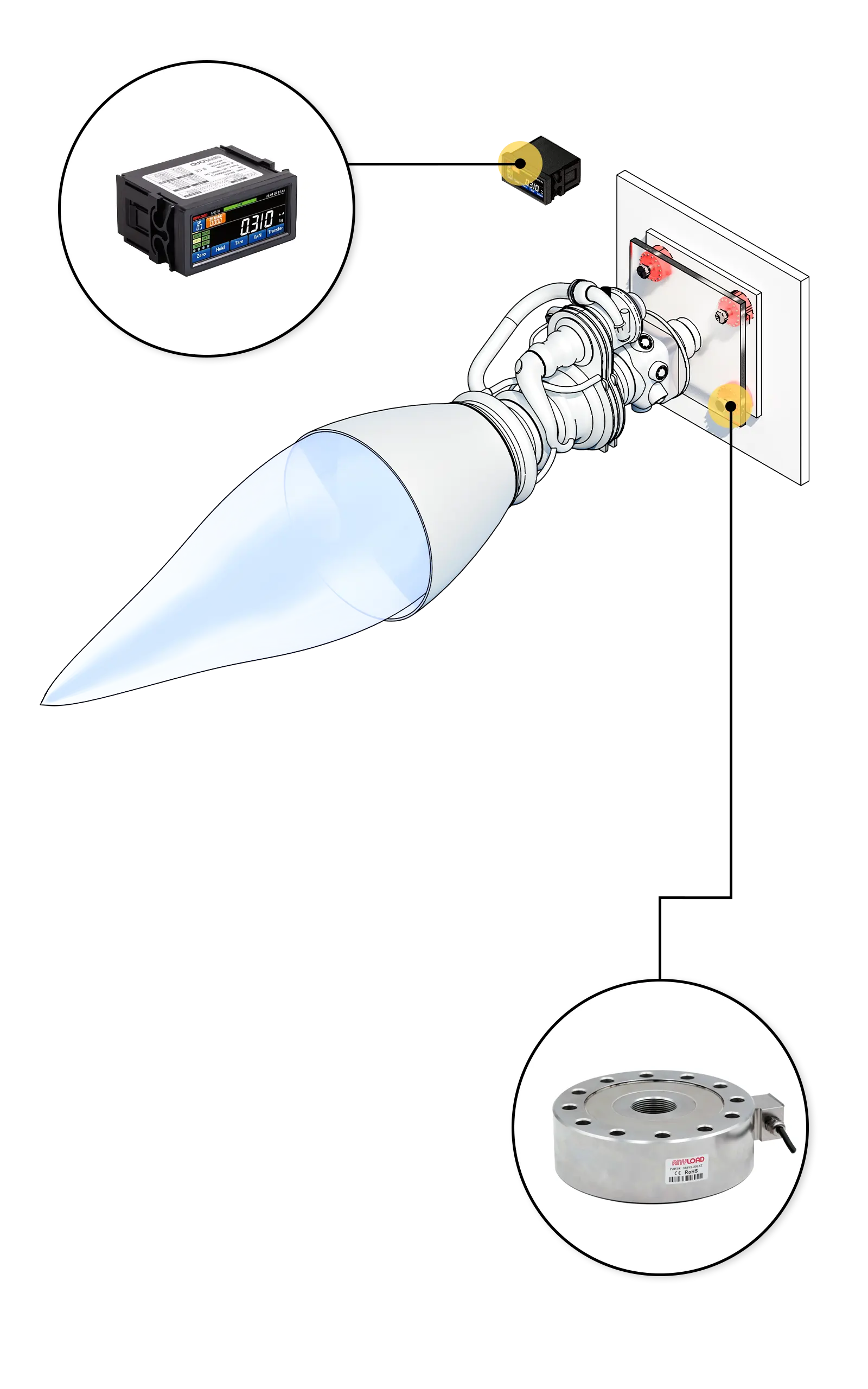
Propulsion development depends on precise force measurement under high vibration, rapid load changes, and severe thermal gradients. Load cells installed in engine test stands measure axial thrust during steady-state operation and the transient forces generated during ignition, throttling, shutdown, and abnormal test events.
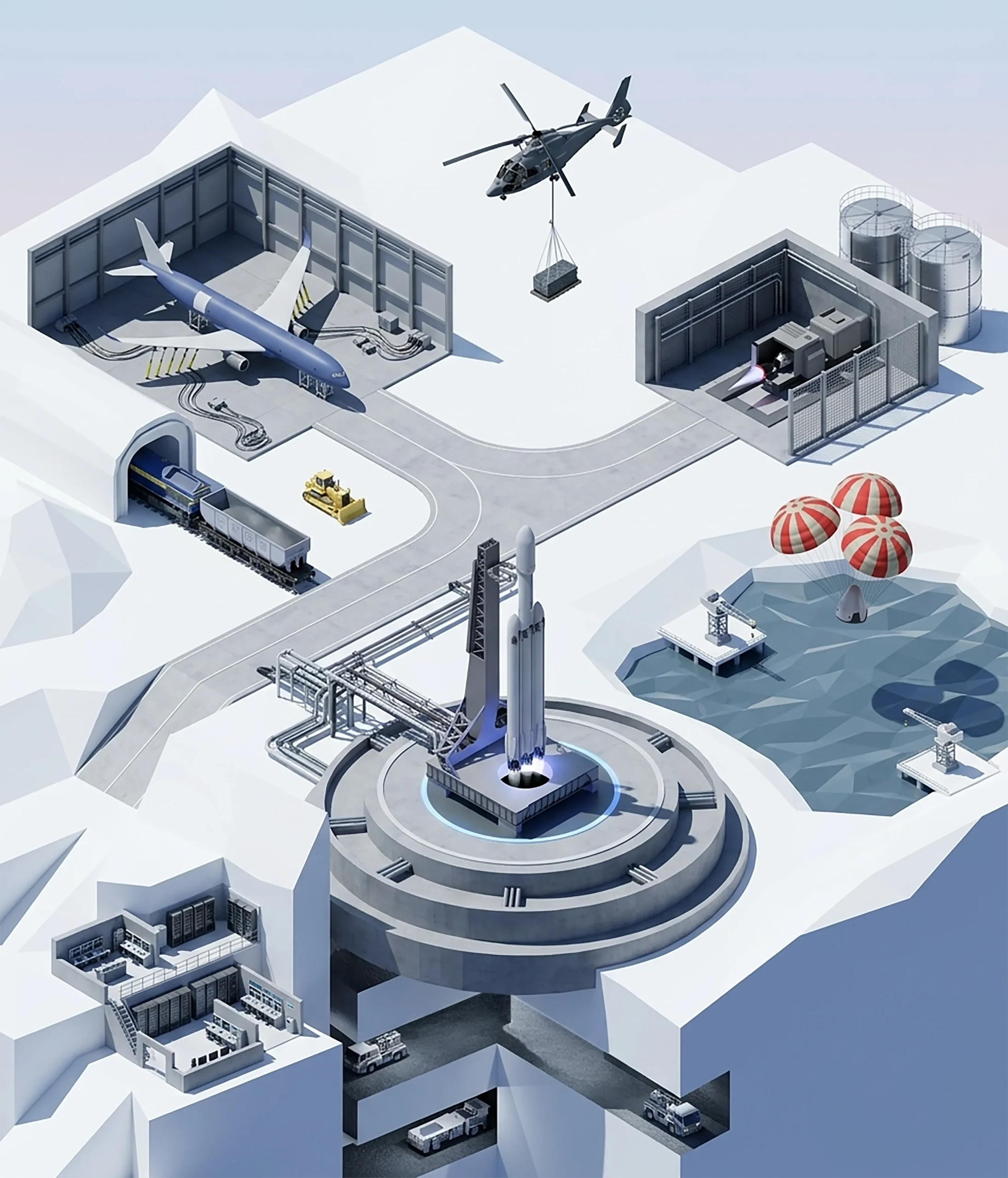
ANYLOAD supports force measurement for turbine engines, electric propulsion systems, liquid-propellant engines, rocket motors, and related propulsion test equipment. High-capacity sensors can also be integrated into launch mounts, support structures, and ground systems to monitor reaction loads, structural preload, and load distribution.
Challenges & Solutions
- Thrust Measurement: Compression and tension load cells measure axial thrust directly through the test stand load path. Proper alignment and mechanical isolation help reduce errors caused by side loads, bending moments, piping reactions, and thermal expansion.
- Transient Thrust Capture: High-speed data acquisition records ignition peaks, thrust buildup, combustion instability, throttle response, and shutdown decay. The AN310 indicator provides sampling rates suited to dynamic force and propulsion testing.
- Thermal Drift Control: Exhaust heat, cryogenic fluids, and rapidly changing test conditions can produce zero shift and sensitivity changes. Application-specific temperature compensation and thermal isolation improve measurement stability.
- Vibration and Electrical Noise: Shielded cabling, stable excitation, signal filtering, and appropriate grounding reduce interference from pumps, valves, ignition systems, motors, and other test-cell equipment.
- Calibration and Traceability: Test stand calibration can use known reference loads, hydraulic calibration systems, or purpose-built loading fixtures to verify the complete force measurement chain before testing.
View Products:
Payload Handling and Aerospace Ground Support Equipment
Aircraft and spacecraft components are frequently moved using lifting fixtures, overhead cranes, hoists, transport dollies, cargo loaders, and specialized ground support equipment. Load monitoring helps prevent overloads, verify payload weight, balance lifting points, and protect sensitive hardware during handling and integration.
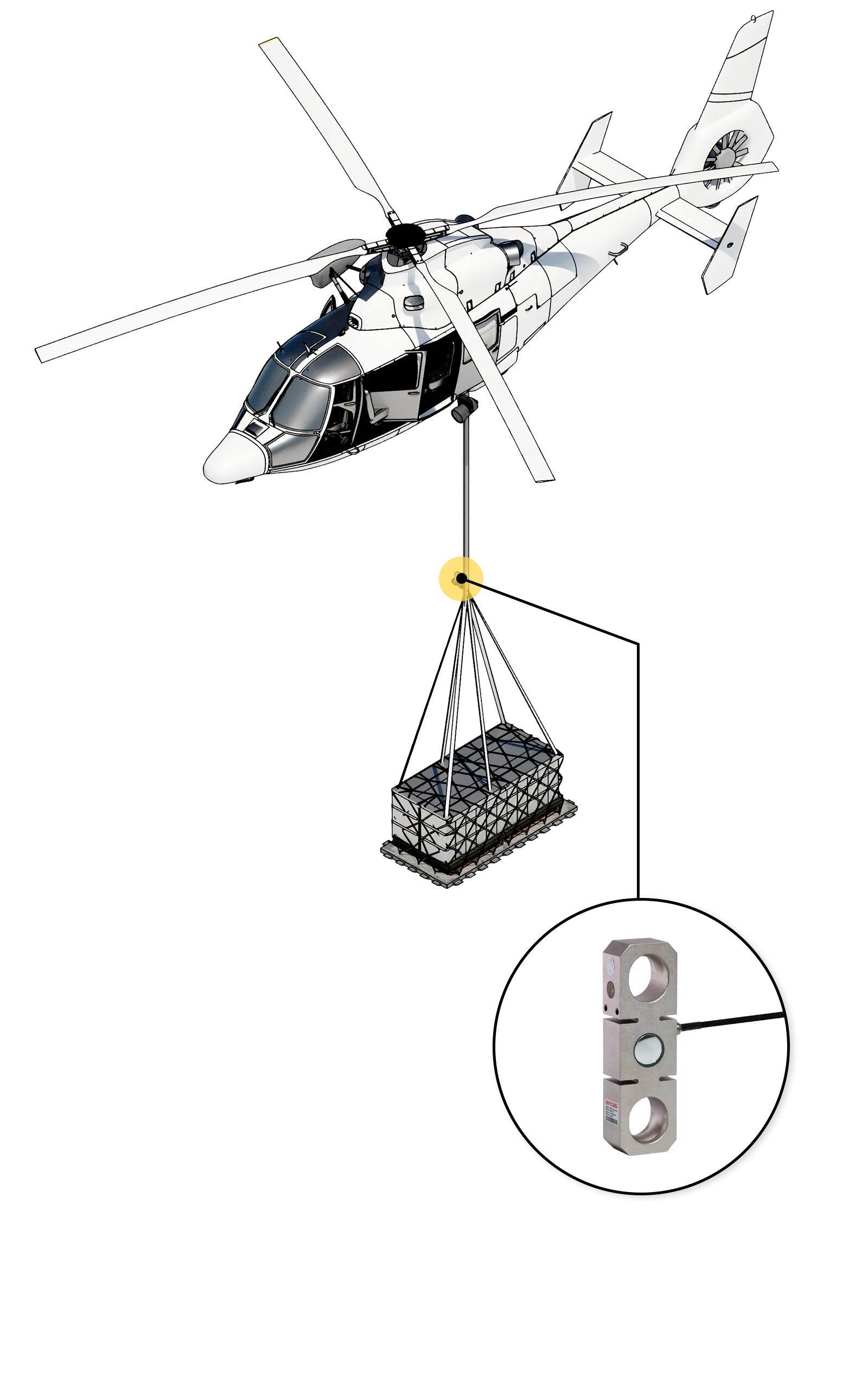
Tension links, load shackles, and instrumented load pins can be installed directly into lifting and rigging assemblies. Compression sensors can be integrated into support stands, transport fixtures, maintenance platforms, and loading equipment.
Challenges & Solutions
- Payload Weight Verification: Portable tension links and platform weighing systems confirm the weight of cargo, test articles, engines, spacecraft components, and other payloads before lifting or transport.
- Multi-Point Lift Monitoring: Individual sensors at each lifting point identify unequal load sharing and help technicians balance spreader beams, slings, and lifting fixtures.
- External Load Measurement: Tension links can measure suspended loads carried by helicopters, heavy-lift rotorcraft, and unmanned aerial systems during development, validation, and specialized lifting operations.
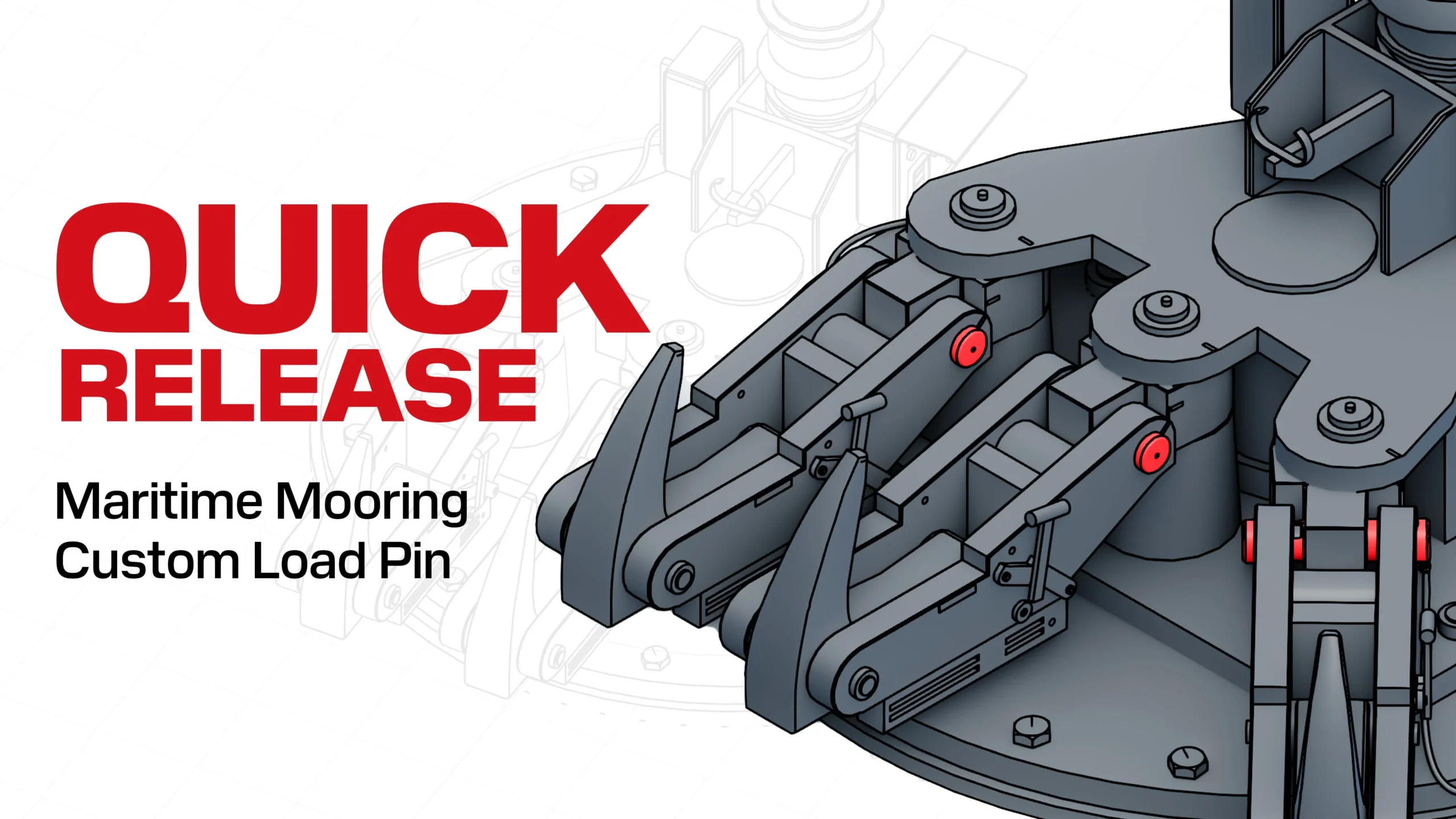
- Load Pin Integration: Existing clevis pins, pulley shafts, hook blocks, and pivot points can often be replaced with custom load pins, allowing force measurement without significantly changing the surrounding mechanism.
- Wireless Field Measurement: Wireless tension links and handheld indicators reduce cabling around moving equipment and allow operators to monitor loads from a safer working position.
View Products:
Spacecraft Robotics & Multi-Axis Force Measurement
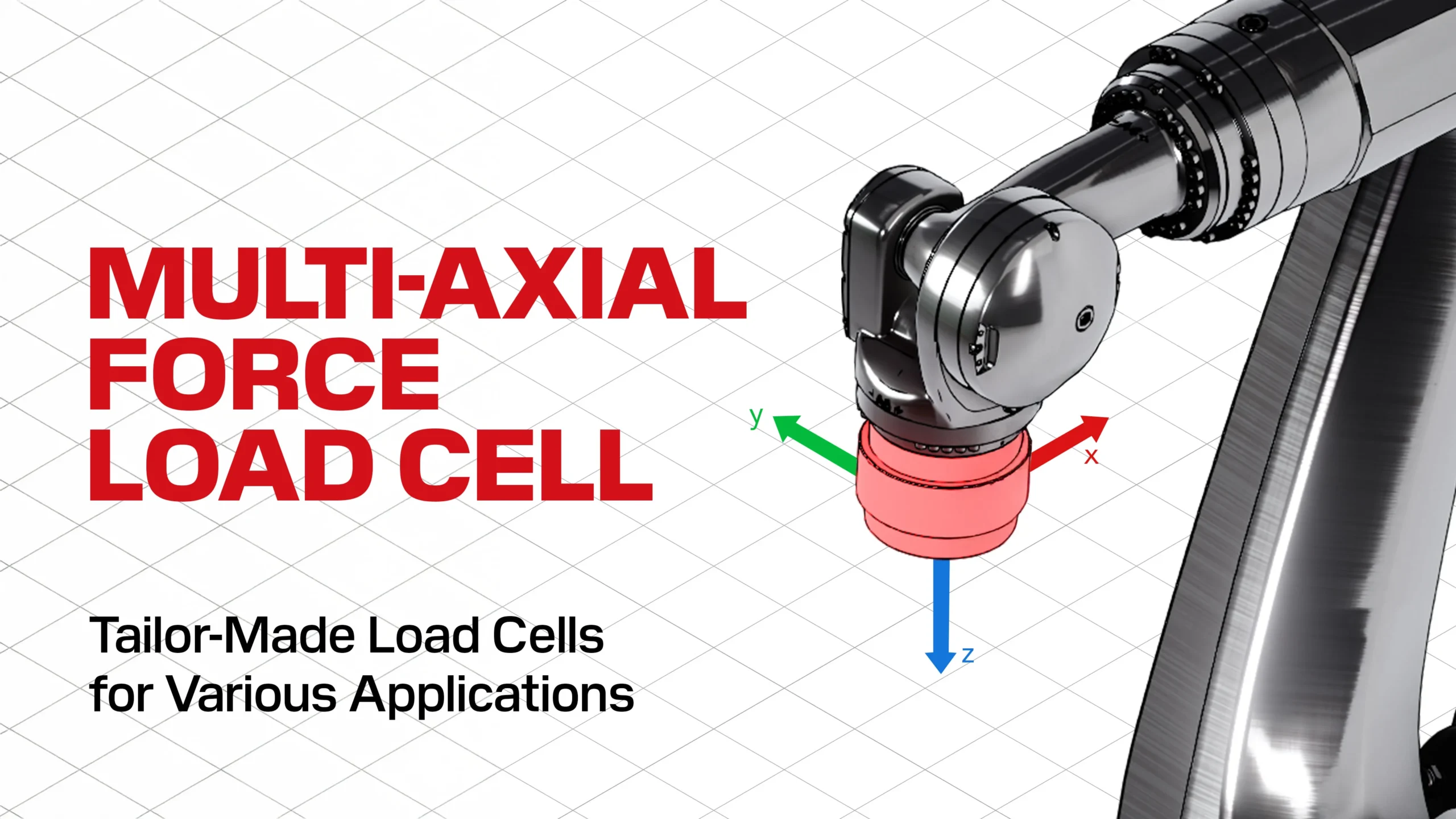
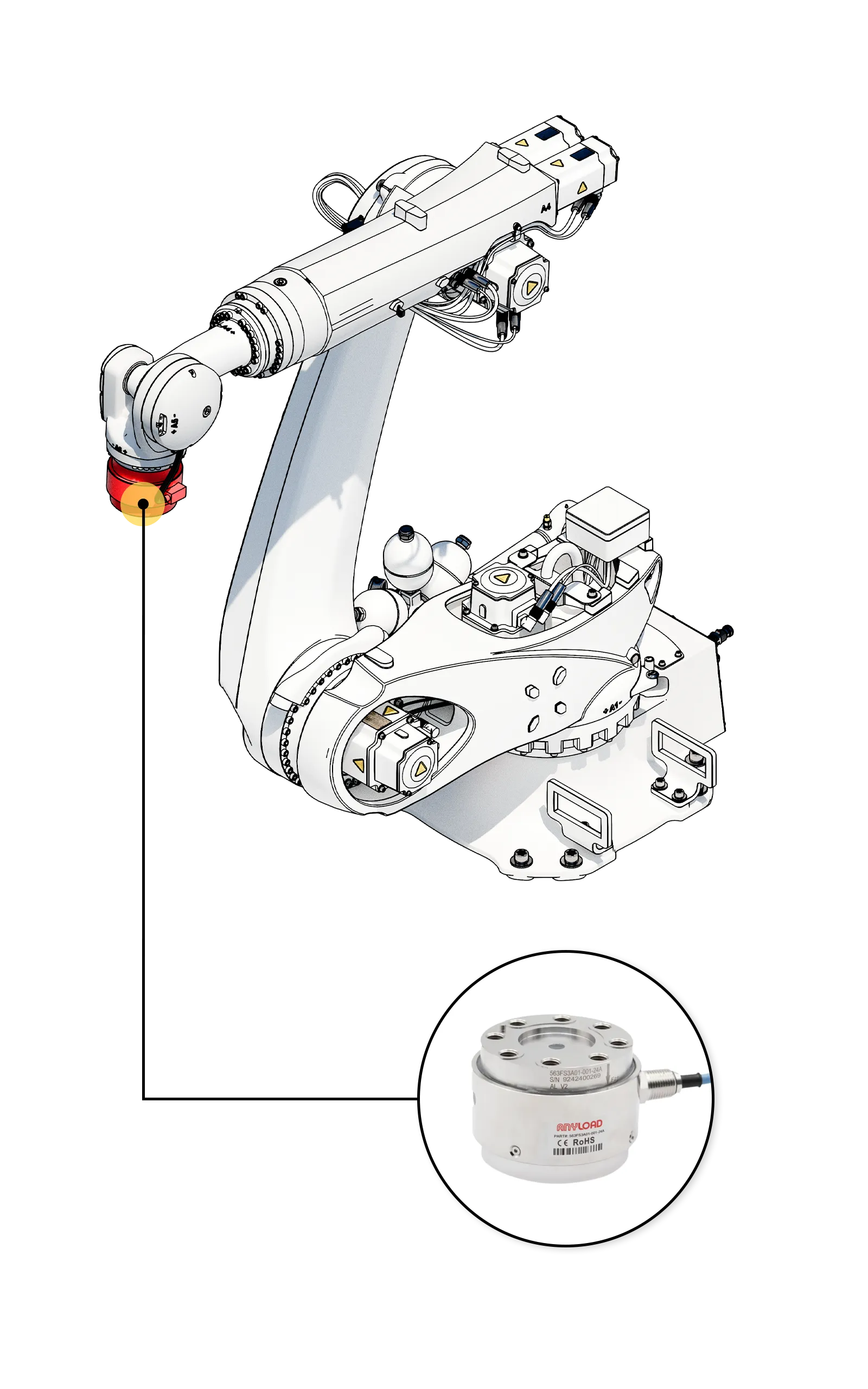
Spacecraft mechanisms, robotic manipulators, automated assembly systems, and payload handling equipment often require force data in more than one direction. Multi-axis force sensors measure combinations of axial, lateral, and transverse forces within a single compact transducer.
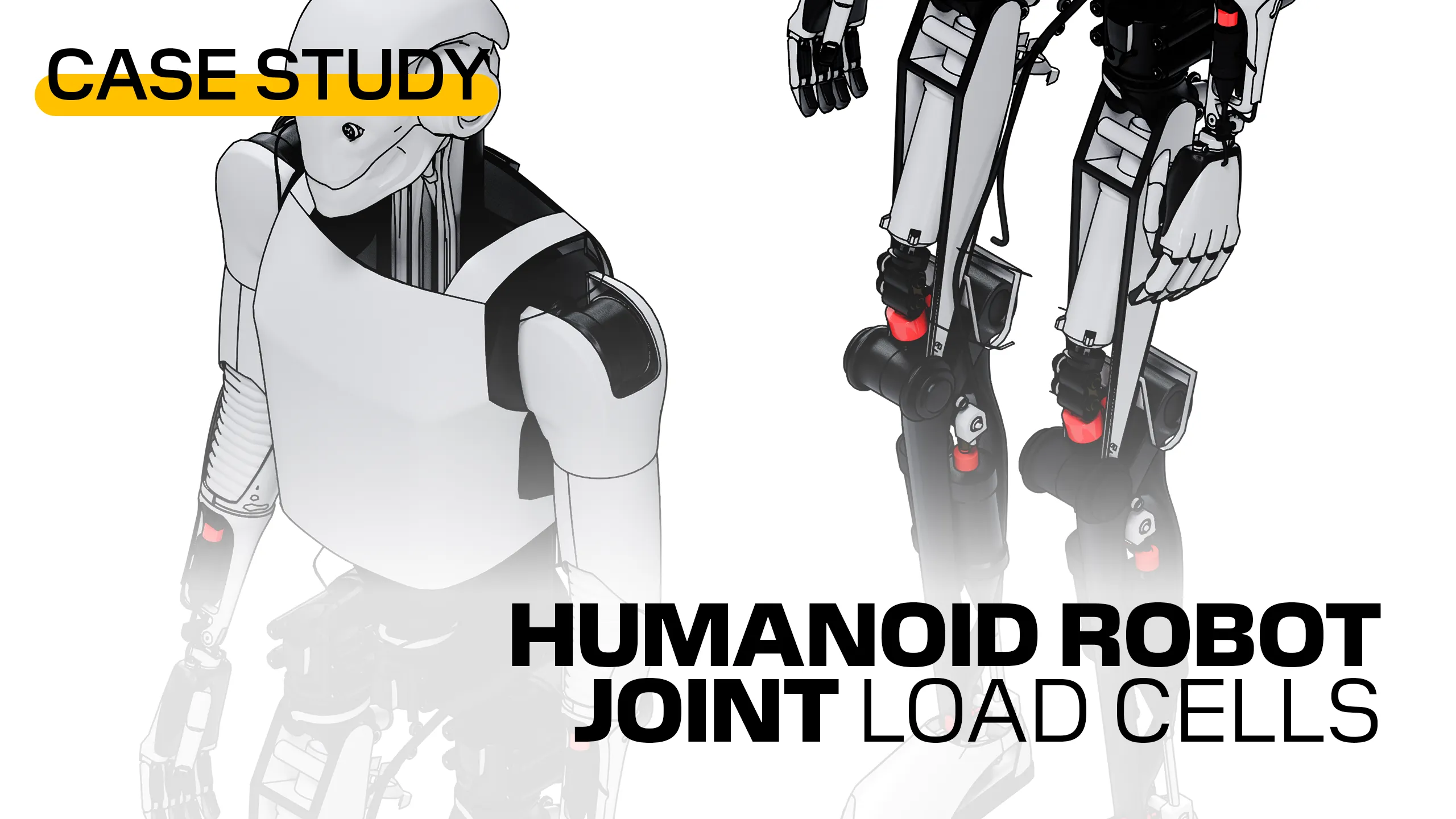
These sensors can provide force feedback for robotic arms, end effectors, actuator test benches, docking and capture simulations, payload insertion systems, and automated aerospace manufacturing equipment. Torque sensors can also measure rotary actuator output, joint torque, bearing resistance, and reaction torque.
Challenges & Solutions
- Multi-Axis Measurement: Tri-axial and custom multi-component sensors resolve forces into individual Fx, Fy, and Fz channels, providing a clearer understanding of complex load paths.
- Force and Torque Feedback: Combined force and torque measurement supports actuator characterization, robotic joint testing, motion control, contact detection, and haptic feedback.
- Compact Integration: Custom sensing elements can be designed around tight installation envelopes, bolt patterns, mechanical interfaces, and mass restrictions.
- Cross-Talk Management: Sensor geometry, strain gauge placement, bridge configuration, calibration, and compensation are optimized to reduce interaction between measurement axes.
- Control System Integration: Analog signals, digital communications, and industrial interfaces can connect force sensors with data acquisition systems, PLCs, motion controllers, and robotic control platforms.
View Products:
Vacuum, Thermal, and Extreme Aerospace Environments
Aerospace sensors may be exposed to vacuum, cryogenic systems, radiant heating, wide temperature cycling, vibration, moisture, and electromagnetic interference. These conditions can affect load cell materials, strain gauge bonding, cable insulation, sealing, zero balance, and sensitivity.
ANYLOAD develops custom load cells and force measurement systems for environmental chambers, thermal-vacuum testing, altitude simulation, propulsion facilities, and other demanding research environments. Sensor construction, compensation, wiring, connectors, and calibration can be adapted to the operating conditions of the application.
Challenges & Solutions
- Vacuum Compatibility: Vacuum-capable load cells use suitable materials, sealing methods, cabling, and construction techniques to maintain stable measurement under reduced pressure.
- Thermal-Vacuum Testing: Sensors used in TVAC chambers may experience hot and cold soak cycles while under mechanical load. Application-specific calibration helps characterize zero and span changes across the required temperature range.
- Cryogenic and Low-Temperature Exposure: Sensors located near cryogenic propellants or low-temperature test systems require suitable materials, cable construction, and compensation to limit thermal output changes.
- High-Temperature Measurement: Remote sensing elements, thermal barriers, high-temperature wiring, and application-specific strain gauge systems can extend force measurement into environments beyond standard load cell operating limits.
- Environmental Qualification: Temperature cycling, fatigue testing, overload testing, vibration evaluation, sealing verification, and calibration can be incorporated into the development and validation process.
View Products:
 English
  Korean
  French
  Spanish