


Marine
Load Cells & Force Measurement Solutions
for Marine Applications
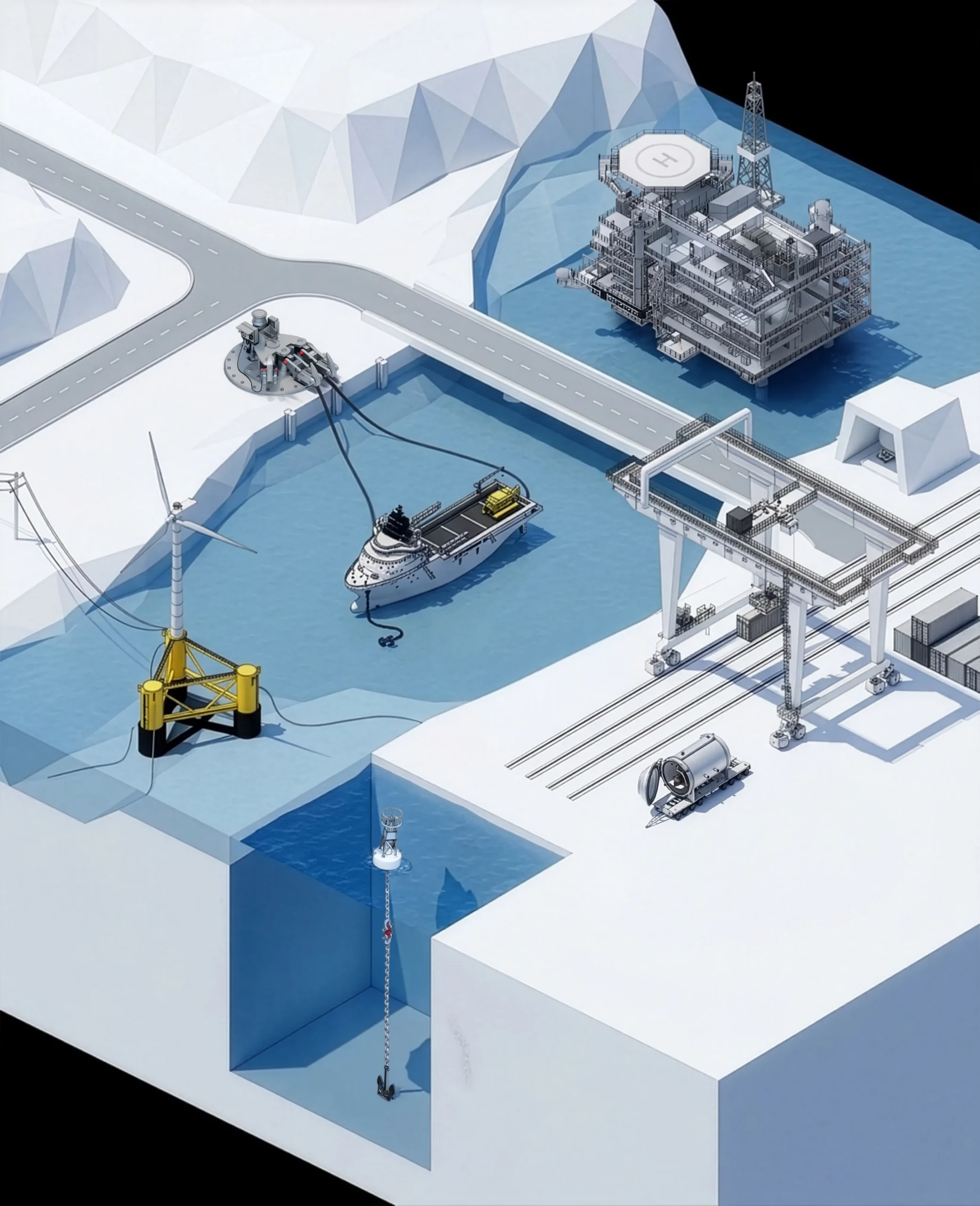
Marine operations depend on accurate load measurement to manage the forces acting on vessels, mooring systems, offshore structures, lifting equipment, and marine infrastructure. From monitoring tension in mooring lines to verifying the weight and centre of gravity of offshore platforms, reliable measurement data helps engineers evaluate structural loads, plan transportation, and monitor equipment performance in demanding marine environments.
ANYLOAD provides cellules de charge, load pins, tension links, and customized weighing systems for marine and offshore applications. Designed around specific load paths, installation constraints, and operating environments, these solutions can support real-time tension monitoring, heavy-structure weighing, container handling, and specialized measurement requirements for marine engineering and preservation.
Why ANYLOAD for Marine?
- Marine Load Monitoring: Measure tension et compression forces in mooring systems, lifting equipment, and load-bearing structures.
- High-Capacity Weighing: Combine multiple load cells to measure the total weight and load distribution of large offshore structures.
- Custom Mechanical Integration: Replace conventional structural pins with instrumented load pins or integrate sensors into existing equipment with application-specific mounting arrangements.
- Environmental Protection: Select suitable materials, sealing, cables, and sensor configurations for exposure to moisture, saltwater, temperature changes, and demanding operating conditions.
- Real-Time Measurement: Integrate load-cell signals with data acquisition and monitoring systems to support operational visibility, testing, and engineering analysis.
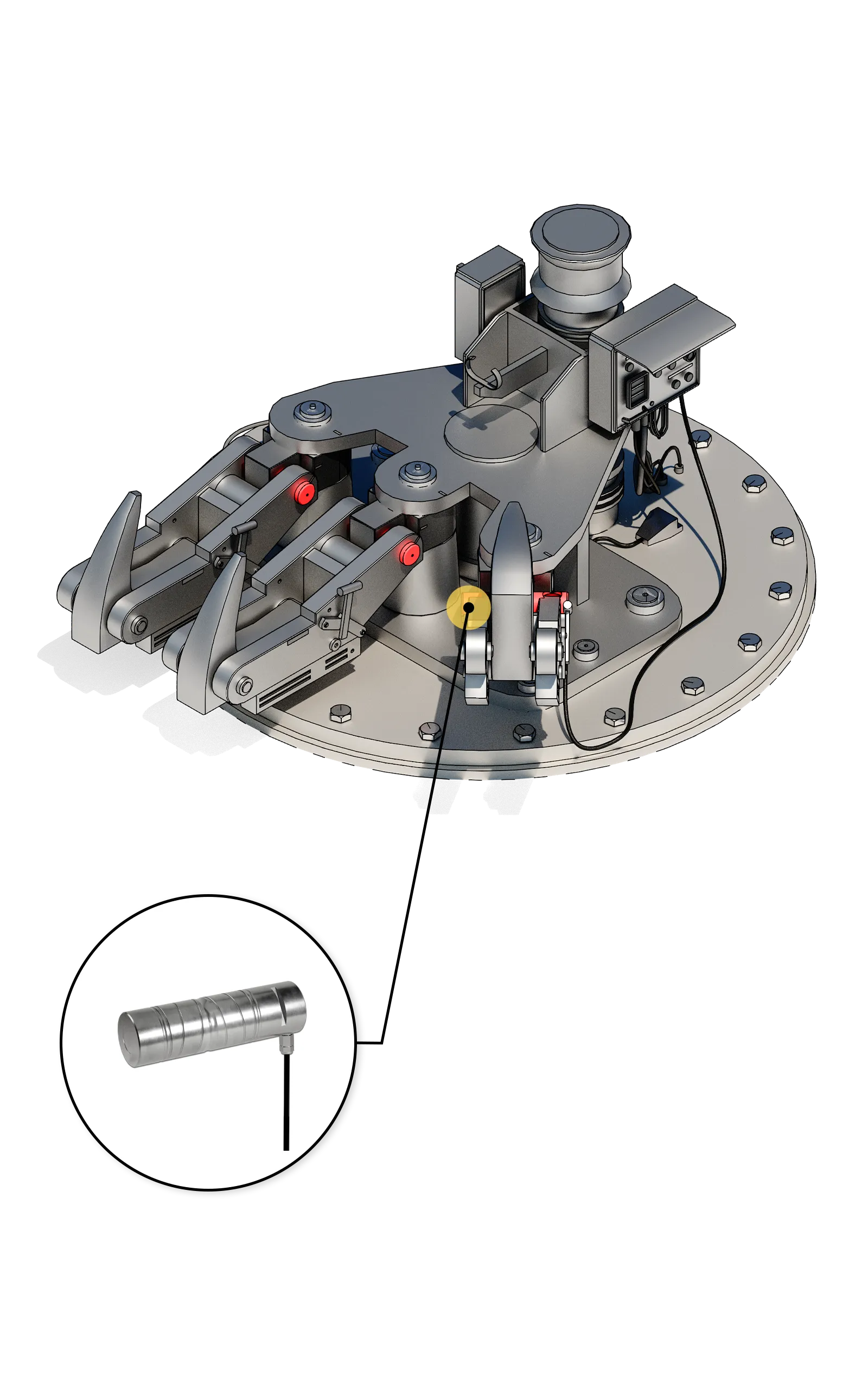
Marine Mooring & Tension Monitoring
Mooring systems secure vessels at commercial ports, oil and gas terminals, and offshore facilities. Wind, waves, tidal currents, and vessel movement cause mooring-line tension to fluctuate over time. Measuring these forces helps operators understand the loads acting on mooring equipment and identify potentially excessive loading before it compromises normal operations.
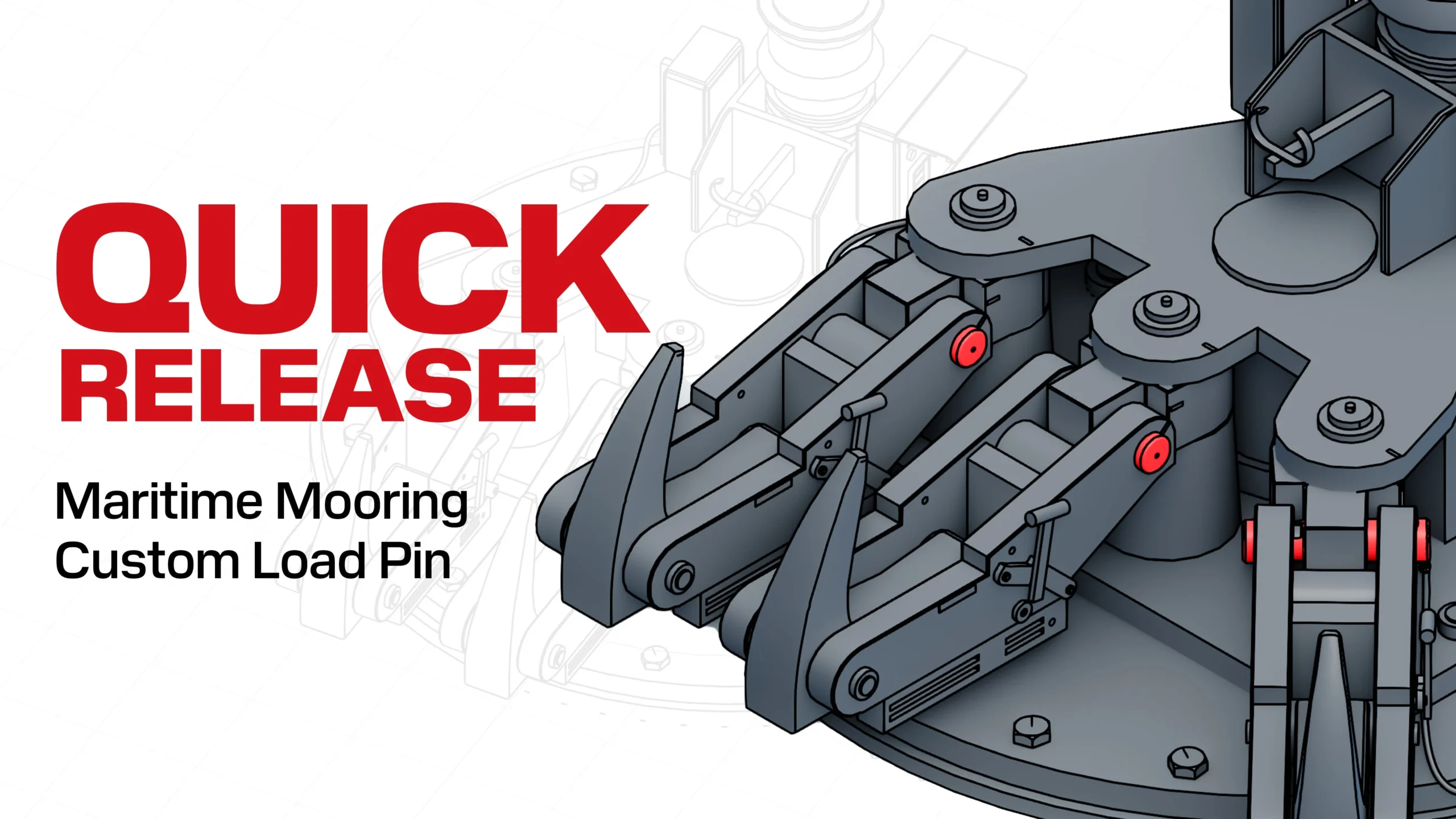
ANYLOAD has developed a custom load pin solution for quick release mooring hooks, integrating force measurement directly into the hook assembly. The instrumented pin measures the load carried by the hook while preserving its intended mechanical function, allowing tension data to be incorporated into a wider monitoring system.
Challenges & Solutions
- Fluctuating Mooring Loads: Wind, waves, currents, and vessel movement produce changing line tension. Integrated load pins provide direct measurements of the force transmitted through the mooring hook.
- Emergency Release Requirements: Quick release mooring hooks must remain functional when a vessel needs to be released. Integrating the sensor into the existing structural pin allows load monitoring without adding a separate component to the mooring line.
- Saltwater Corrosion: Marine installations face moisture, salt exposure, and temperature changes. Appropriate materials, sealing, and cable protection help maintain measurement reliability in the intended environment.
- Continuous Monitoring: Operators need real-time visibility of load changes, not just periodic inspections. Connected instrumentation can transmit force data to monitoring systems and trigger alarms or automated responses when configured.
- Custom Hook Geometry: Existing mooring systems may have unique pin dimensions and mechanical requirements. Custom load pins can be designed around the required dimensions, load capacity, and signal interface.
Voir les produits :
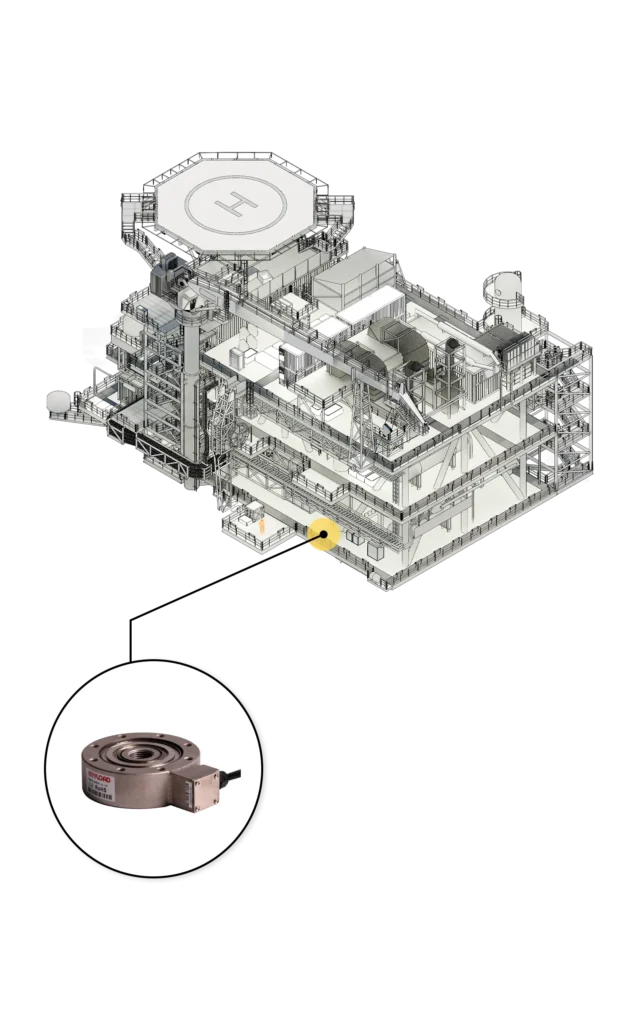
Offshore Platform Weighing & Load Distribution
Offshore drilling platforms and other large marine structures must be weighed accurately during construction, quality verification, and preparation for transportation or installation. Total weight alone may not be sufficient: engineers may also need to determine the centre of gravity and understand how the load is distributed across multiple support points.
ANYLOAD addressed this requirement with a high-capacity weighing system using 363YH compression load cells and synchronized data acquisition. The published case study describes a system capable of monitoring more than 50 cellules de charge individually, by section, and as a complete system, supporting total-weight verification and centre-of-gravity calculations for large offshore structures.
Challenges & Solutions
- Extremely High Loads: Large offshore structures can impose substantial loads at individual support points. High-capacity compression load cells provide measurements at the locations where the structure transfers its weight to the weighing system.
- Centre-of-Gravity Determination: The distribution of weight affects lifting, transport, and installation planning. Synchronized measurements from multiple cellules de charge provide the data needed to calculate the structure’s total weight and centre of gravity.
- Limited Installation Height: Temporary weighing equipment must fit beneath a structure that may already be supported by hydraulic lifting equipment. Low-profile load cells help reduce the additional height required for measurement.
- Uneven Load Distribution: Differences between support-point loads can reveal how the structure’s weight is distributed. Multi-channel data acquisition allows engineers to compare readings across individual supports and structural sections.
- Coordinated Measurement: Measurements from numerous support points must be collected consistently. A centralized acquisition system can combine individual readings for analysis of the entire structure.
Voir les produits :
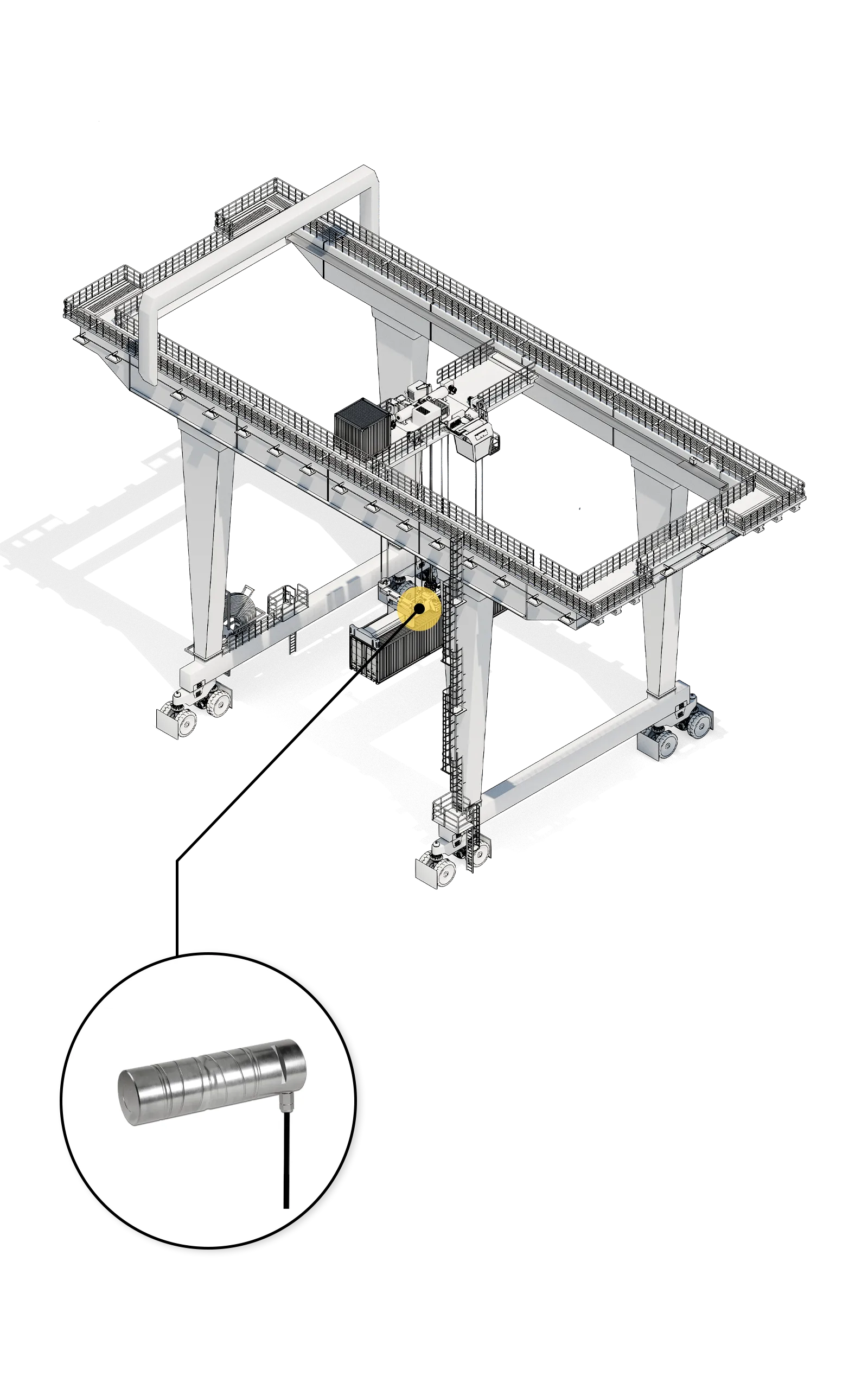
Port Operations & Container Crane Weighing
Container terminals depend on cranes and lifting systems to transfer cargo between ships, docks, storage areas, and transportation networks. Measuring the load carried by lifting equipment provides useful information for load monitoring, overload detection, and cargo-handling operations.
ANYLOAD’s container crane weighing application uses custom load pin load cells integrated into the crane’s lifting mechanism. By replacing a conventional structural pin with an instrumented pin, the system measures lifting loads without requiring a separate weighing station or fundamentally changing the existing lifting arrangement.
Challenges & Solutions
- Changing Loads During Lifting: Crane loads change as containers are picked up, moved, and set down. Load pins measure the force transmitted through the instrumented connection during these operations.
- Heavy-Duty Operating Conditions: Crane mechanisms experience repeated loading, vibration, and exposure to outdoor conditions. Appropriate sensor capacity, construction, and environmental protection help support reliable operation.
- Integration with Existing Equipment: Adding a separate weighing platform can interrupt established workflows. A custom load pin can replace a compatible structural pin within the existing lifting mechanism.
- Salt and Moisture Exposure: Port equipment operates in environments where corrosion protection is an important design consideration. Suitable stainless steel construction and sealing can help protect the sensing element.
- Operational Visibility: Operators and monitoring systems need timely load information. Connected instrumentation can display or record measurements and support configured load alerts.
Voir les produits :
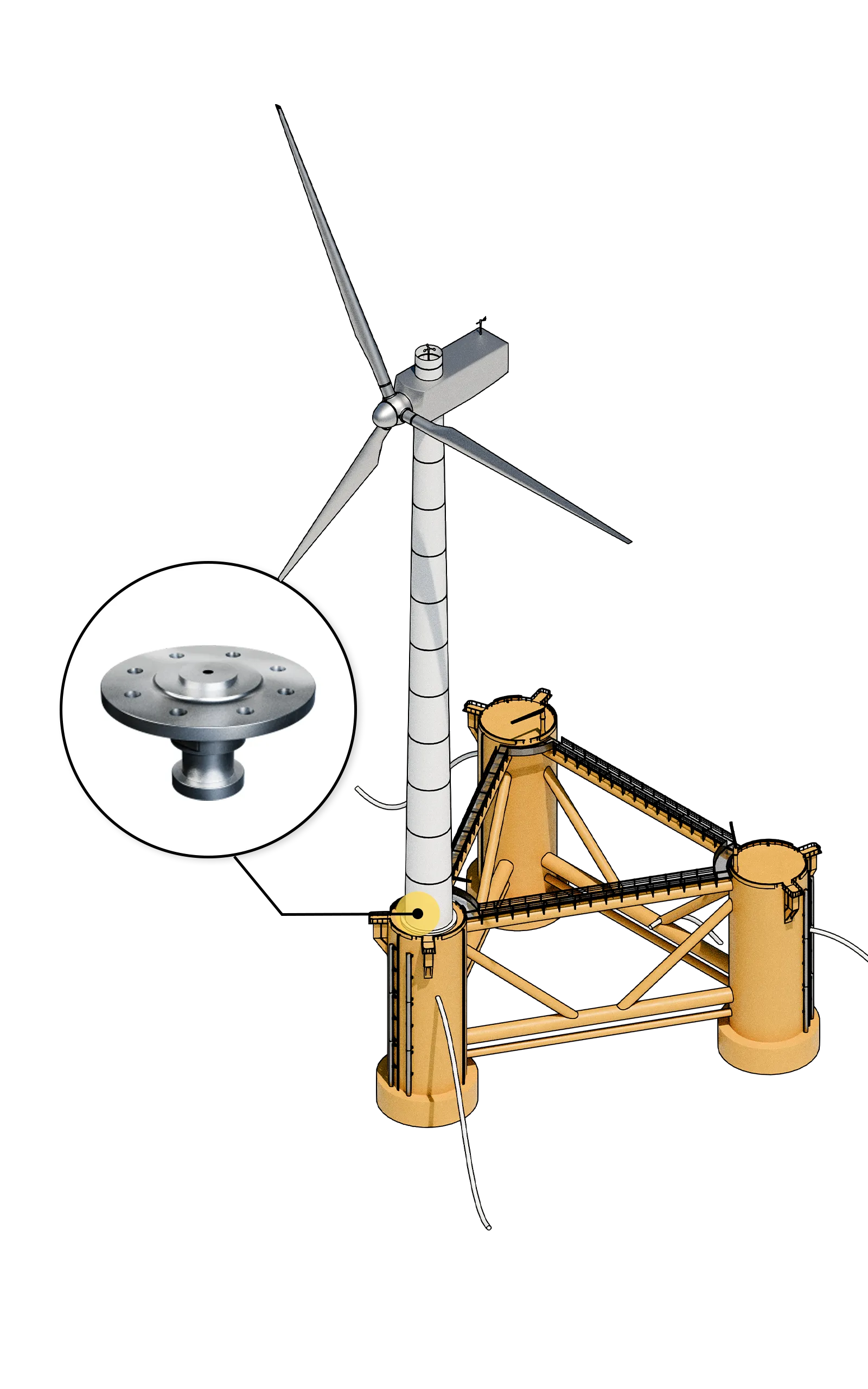
Offshore Wind Energy &
Turbine Blade Weighing
Wind turbine blades must be manufactured with carefully controlled weight and centre-of-gravity characteristics. Significant differences between blades can create rotor imbalance, increasing vibration and uneven loading on bearings, gearboxes, and other turbine components.
ANYLOAD’s wind turbine blade weighing application uses tension-link technology to measure blade weight and support balancing during manufacturing. The 110BH tension link was incorporated into a customized weighing arrangement, with purpose-built shackle assemblies developed to improve measurement repeatability. Although the case study focuses on blade manufacturing rather than an offshore installation itself, the application is directly relevant to offshore wind turbine production and deployment.
Challenges & Solutions
- Large Blade Loads: Modern turbine blades can weigh tens of tonnes. Appropriately rated tension links and mounting hardware allow the weighing system to accommodate the required load.
- Weight and Balance Consistency: Differences in blade weight and centre of gravity can affect rotor balance. A suitable weighing arrangement provides the measurements needed to compare blades and support manufacturing quality control.
- Repeatable Rigging: Variations in shackle geometry and mounting alignment can affect measurement consistency. Custom mounting assemblies help create a repeatable connection between the blade-handling arrangement and the sensor.
- Heavy Lifting Operations: Blade weighing involves large structures and lifting equipment. Sensors and rigging must be selected and integrated according to the required capacity, load direction, and applicable lifting procedures.
- Long-Term Measurement Reliability: Manufacturing quality systems depend on consistent results over repeated measurements. Appropriate calibration and planned maintenance help preserve measurement accuracy over time.
Voir les produits :
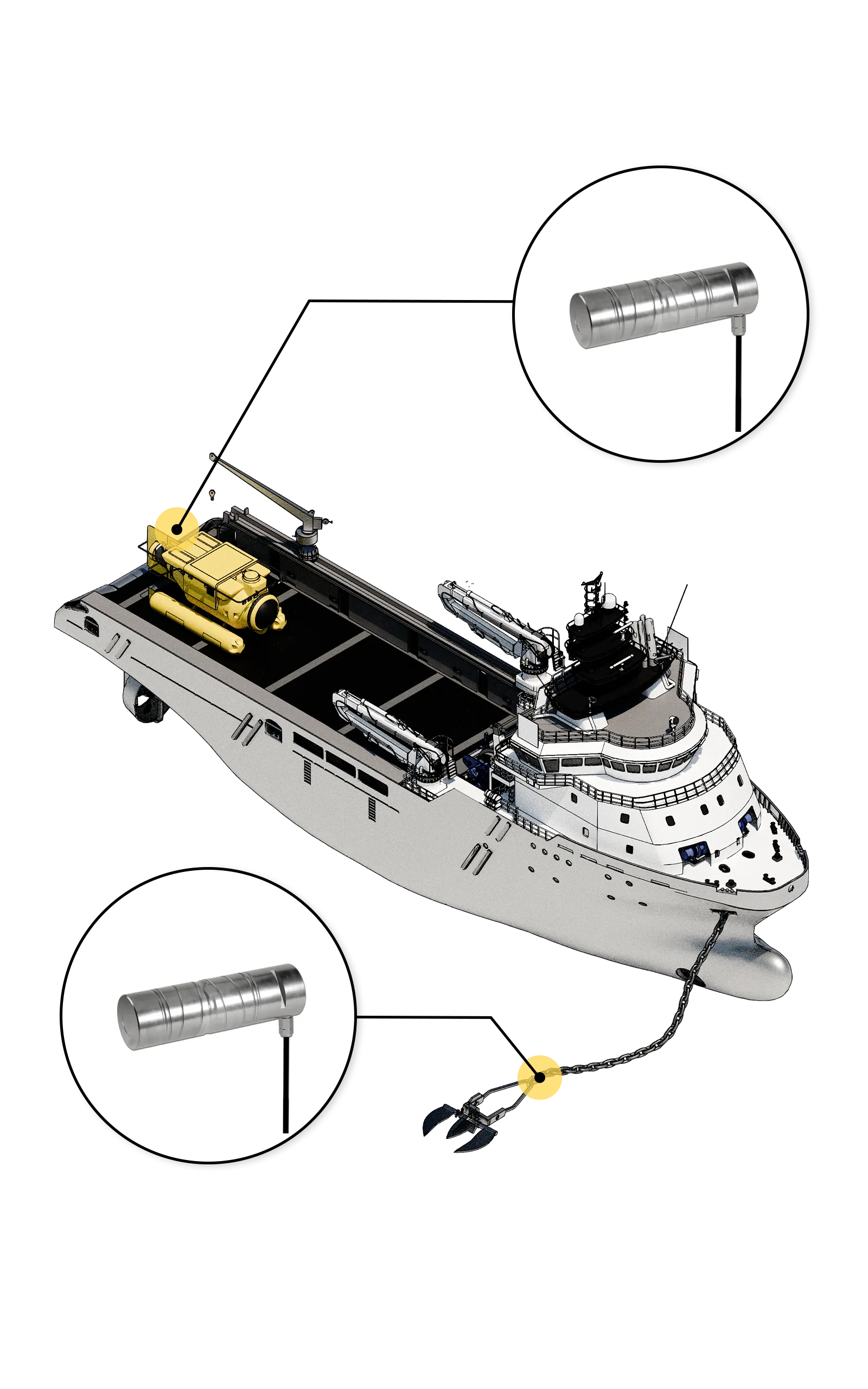
Anchor, Winch & Marine
Crane Load Monitoring
Anchoring systems, offshore mooring lines, winches, and marine cranes transmit substantial forces through chains, cables, shackles, and structural connections. Measuring tension at these points can help engineers understand loading conditions during anchoring, towing, lifting, and offshore operations.
ANYLOAD’s marine applications demonstrate two relevant measurement approaches: the 110BH tension link for monitoring offshore mooring cables and custom load pins for measuring loads directly through crane and mooring-hook connections. These approaches can be adapted to compatible anchor-handling equipment, winches, and lifting systems according to their mechanical and environmental requirements.
Challenges & Solutions
- Changing Line Tension: Vessel movement, waves, and equipment operation can produce fluctuating tension in cables and chains. Inline tension links measure the force transmitted through a suitable connection point.
- Heavy Lifting Loads: Marine cranes and anchor-handling equipment may carry substantial and changing loads. Appropriately rated load pins can measure force through compatible structural connections.
- Restricted Installation Space: Existing rigging and machinery often leave little room for additional sensors. Load pins et tension links can integrate into suitable connection points without requiring a separate weighing platform.
- Marine Environmental Exposure: Saltwater, moisture, and temperature changes can affect sensor materials and electrical connections. Material selection, sealing, and cable protection must be matched to the actual operating environment.
- Continuous Load Data: Monitoring systems can record force measurements over time, helping engineers review loading patterns, evaluate equipment behaviour, and establish condition-monitoring strategies.
Voir les produits :
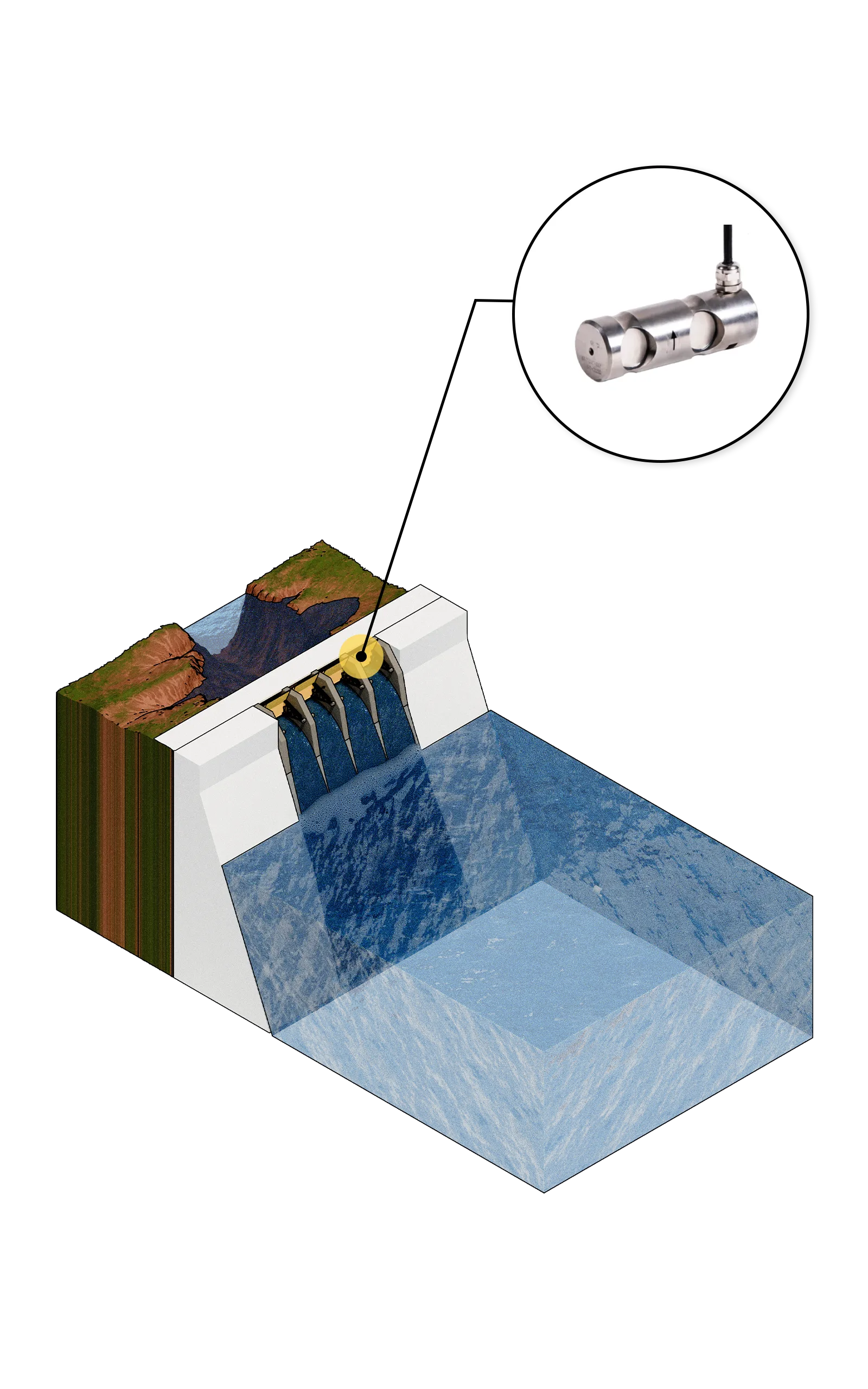
Dam Spillway Gates &
Hydraulic Infrastructure
Spillway gates regulate water discharge from dams and reservoirs. Their hoisting mechanisms, chains, cables, and supporting structures experience changing forces as gates move under different hydraulic and mechanical conditions. Measuring hoisting tension can help engineers evaluate gate operation, identify uneven loading, and investigate mechanical problems.
A 2026 publication examined hoisting-chain tension measurements for dam spillway gates and methods for identifying uneven hoisting. The research illustrates how force-related measurements can help assess the behaviour of large water-control structures.
Challenges & Solutions
- Uneven Gate Hoisting: Differences in hoisting force can indicate uneven gate movement. Sensors installed at load-bearing connection points can measure and compare tension in individual chains or lifting points.
- Changing Mechanical Loads: Gate movement and changing operating conditions affect the forces acting on hoisting systems. Force measurement provides data for evaluating loading patterns throughout the operating cycle.
- Difficult Installation Access: Hoisting machinery may contain confined or established mechanical assemblies. Custom load pins can be designed around compatible structural connections to simplify sensor integration.
- Outdoor Environmental Exposure: Water, humidity, and temperature fluctuations place demands on sensors and electrical connections. Suitable environmental protection and material selection are important for long-term installation reliability.
- Long-Term Structural Monitoring: Repeated measurements can help engineers identify changes in operating behaviour over time. Connected data acquisition allows measurements to be recorded and compared as part of a broader monitoring program.
Voir les produits :
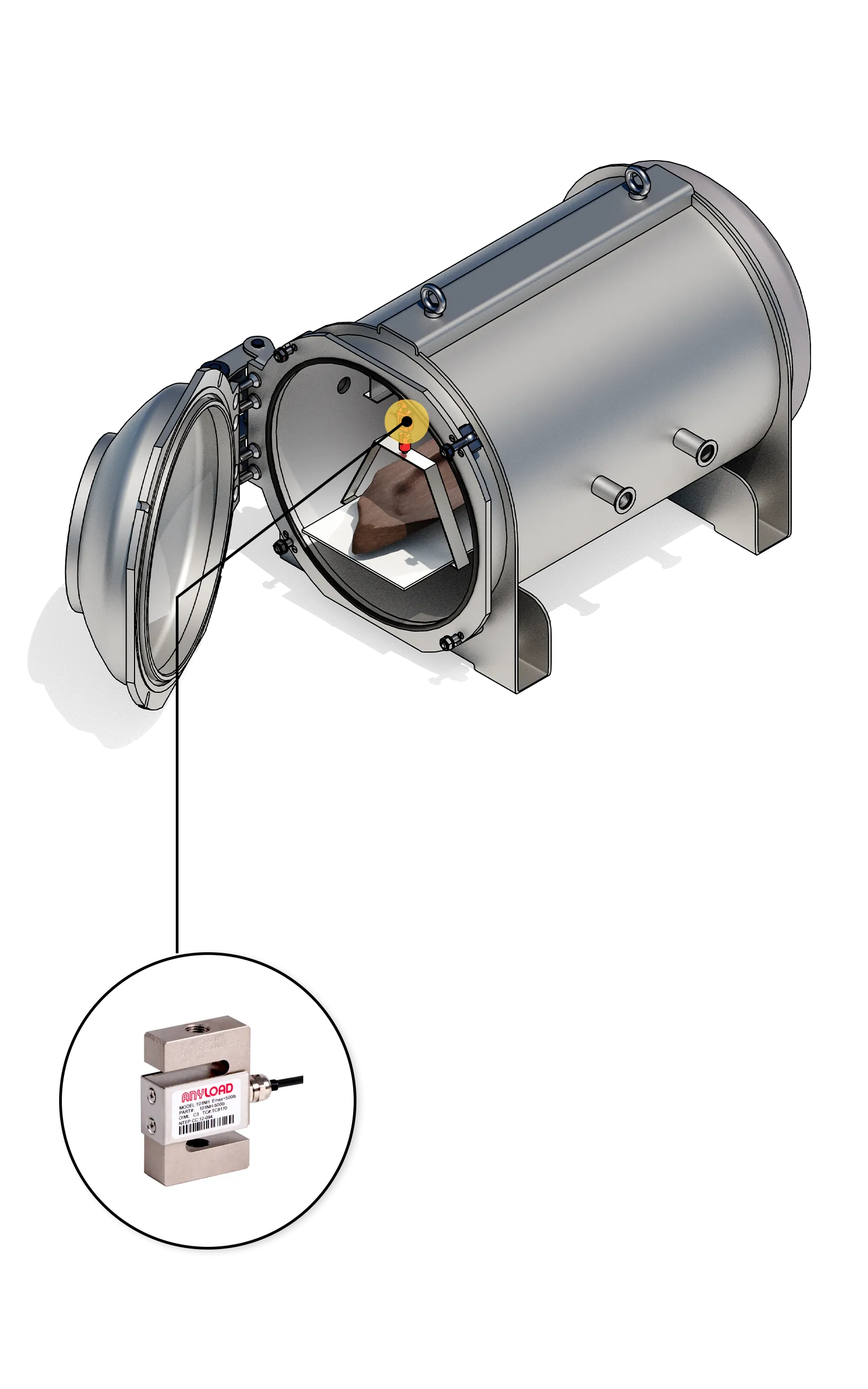
Marine Heritage &
Environmental Preservation
Marine archaeology and heritage conservation involve recovering, transporting, studying, and preserving artifacts from underwater environments. Waterlogged wooden artifacts can undergo significant changes in moisture content after recovery. Their physical condition may also change over time. Accurate weight monitoring can provide useful information during specialized conservation and drying processes.
ANYLOAD’s ancient canoe weighing case study addresses the preservation of a 5,000-year-old canoe discovered in China. During conservation, the canoe underwent freeze-drying at approximately −40°C, followed by vacuum dehydration and stabilization. The measurement system required stable performance across extreme temperatures, vacuum conditions, and high humidity. ANYLOAD developed a specialized weighing solution using customized sensing elements, temperature compensation, vacuum-compatible materials, and multiple layers of sealing to monitor the artifact’s weight throughout the conservation process.
Challenges & Solutions
- Extreme Temperature Changes: Freeze-drying processes expose the weighing system to temperatures well below typical industrial operating conditions. Specialized strain gauges and temperature compensation help maintain measurement stability across the required range.
- Vacuum Compatibility: Conventional sensor materials and sealing systems may not be suitable for prolonged vacuum exposure. Vacuum-compatible materials, specialized cables, and carefully designed sealing help maintain sensor performance in the intended environment.
- Moisture and Humidity: Waterlogged artifacts and conservation processes can create demanding moisture conditions. Multi-layer sealing helps protect sensitive internal components from moisture ingress.
- Long-Term Weight Monitoring: Changes in an artifact’s weight can provide useful information during drying and stabilization. Consistent measurement allows conservators to track weight changes throughout the process and evaluate them alongside other conservation criteria.
- Preserving Fragile Artifacts: Historical objects may be too delicate for repeated handling or transfer between weighing stations. An appropriately designed integrated weighing arrangement can reduce unnecessary movement while supporting ongoing monitoring.
Voir les produits :
Custom Solutions for Marine Applications
From mooring-line tension and container crane weighing to offshore platform verification, marine renewable energy, and heritage conservation, reliable load measurement helps engineers understand the forces acting on critical structures and equipment.
ANYLOAD works with equipment manufacturers, marine engineering teams, and system integrators to develop weighing and force measurement solutions around specific load capacities, mounting arrangements, environmental conditions, and data acquisition requirements. Standard cellules de charge, tension linkset load pins can support established applications, while customized sensor designs address specialized installation and measurement challenges.
Have a marine or offshore measurement challenge? Contact ANYLOAD to discuss a load cell or force measurement solution tailored to your application.
 English
 Korean
 French
 Spanish