

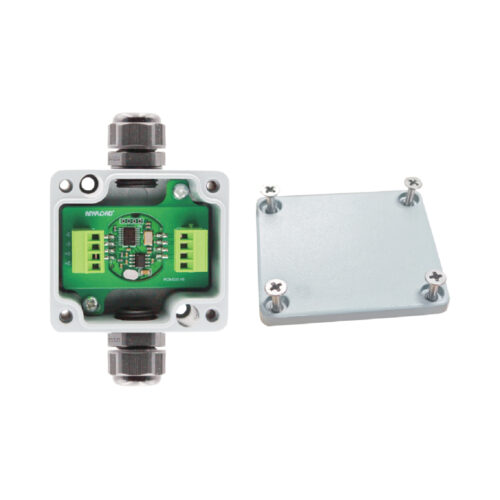
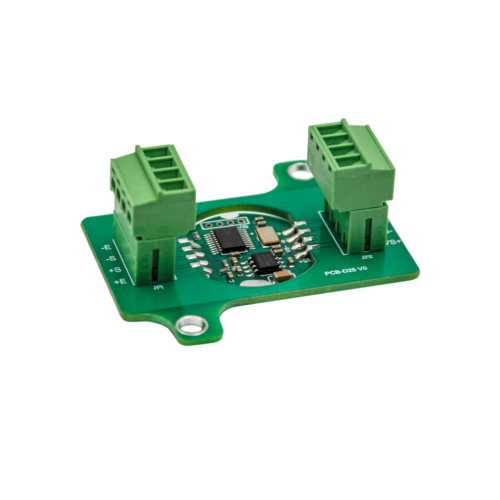
A1A-D25C Amplificateur numérique pour capteur de pesage
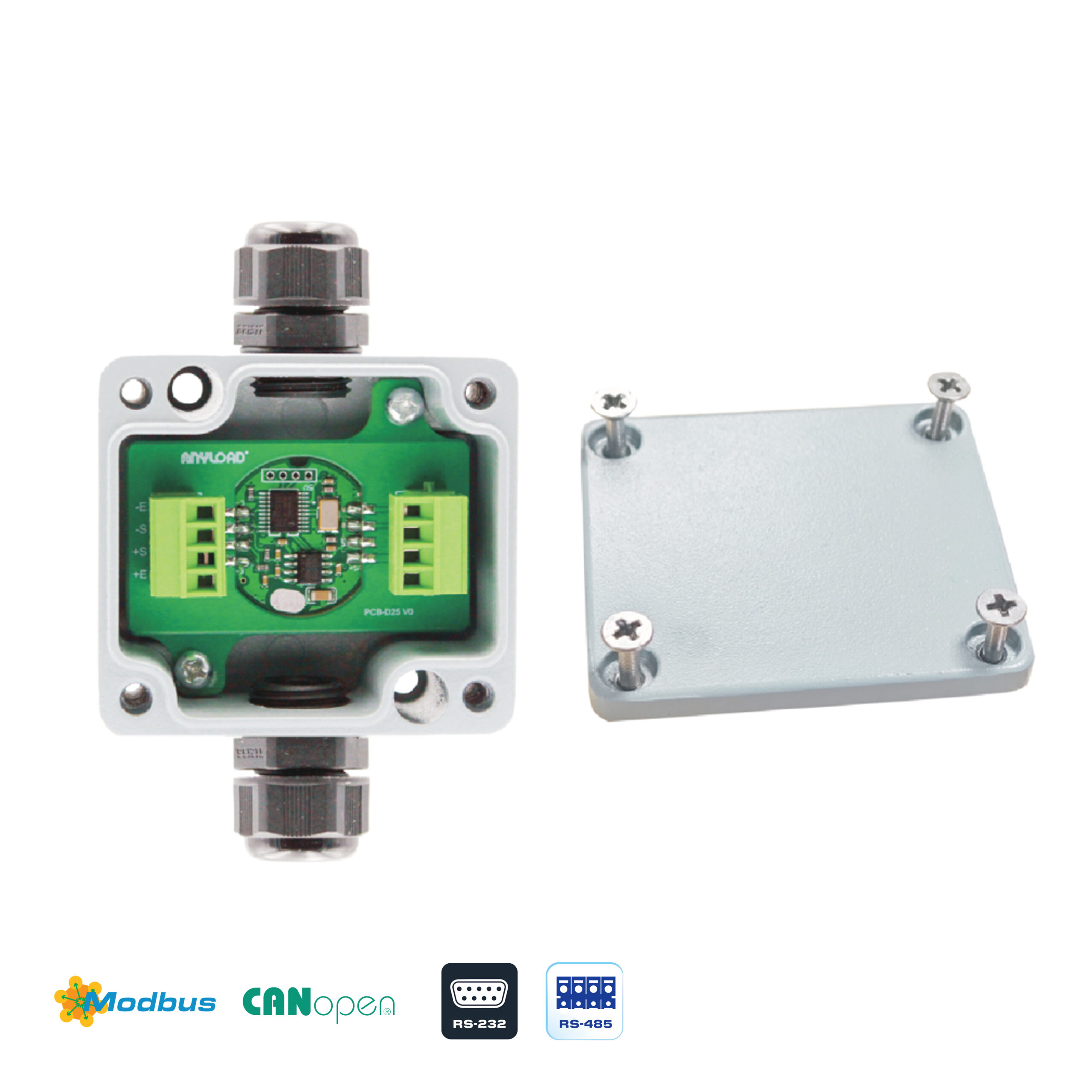
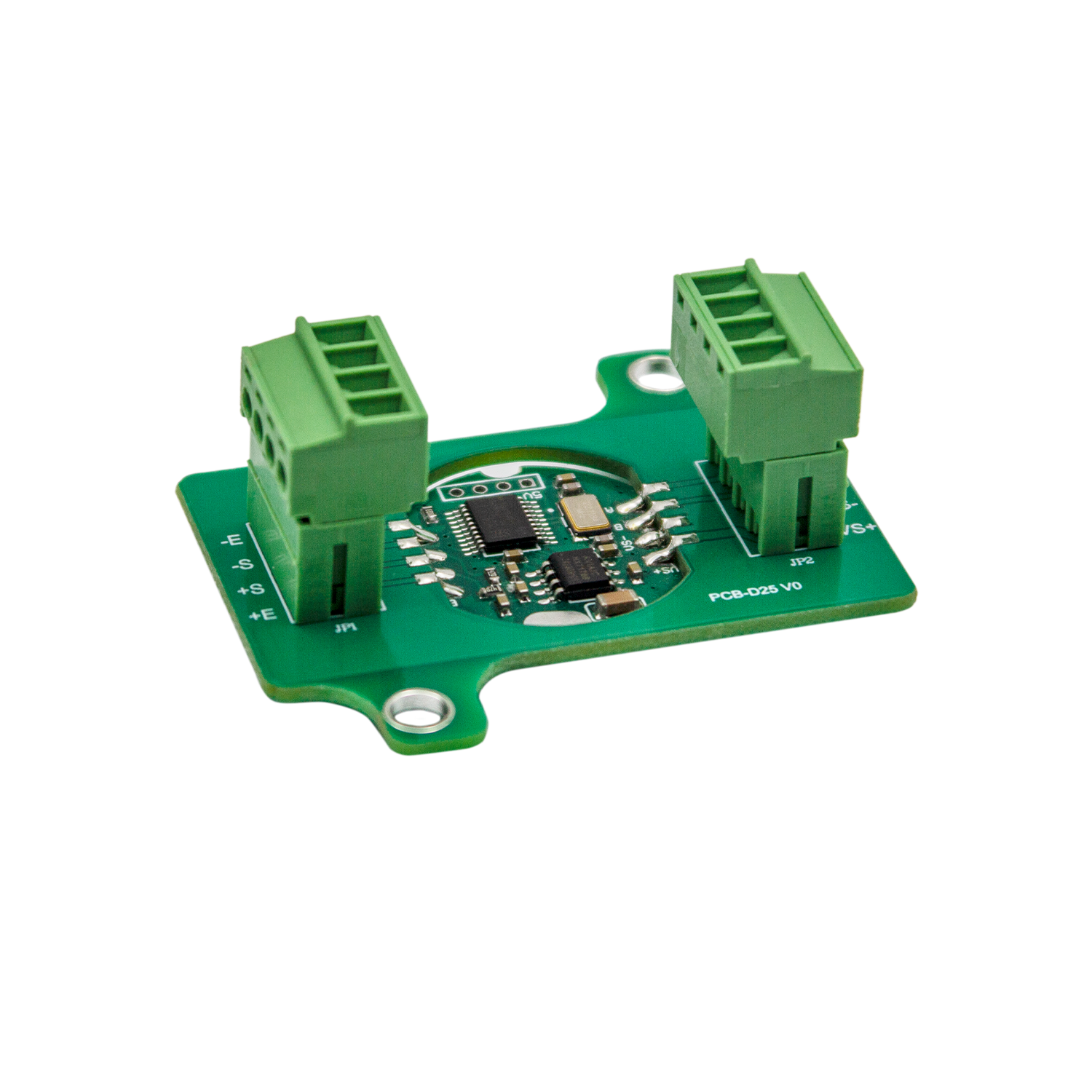
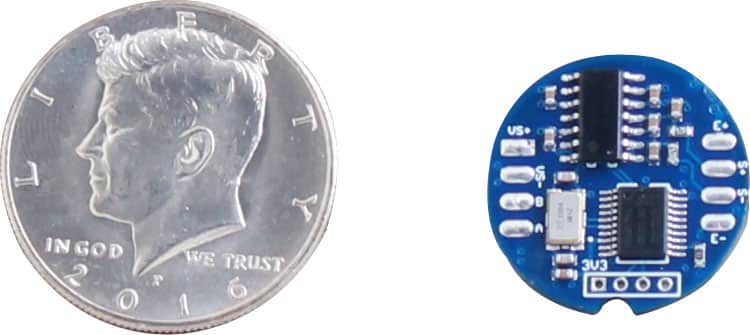
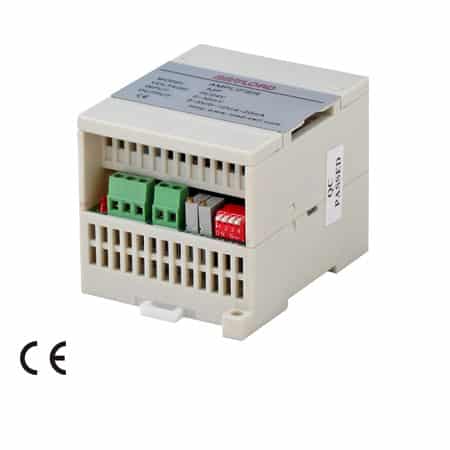
The ANYLOAD A1A-D25C Digital Load Cell Amplifier is a compact signal conditioning module designed to convert analog strain gauge signals into digital outputs for industrial, mobile, and OEM control systems. Supporting multiple communication protocols including CAN J1939, CANopen, Modbus, and RS-232/RS-485, the A1A-D25C enables direct integration of sensors into vehicle networks, PLC systems, and embedded controllers. Built with a 24-bit A/D converter and high-speed processor, it delivers stable, high-resolution measurement with <0.1% non-linearity and <0.3% full-scale accuracy, suitable for both dynamic and static measurement applications .
The amplifier accepts standard strain gauge (Wheatstone bridge) inputs from 0.5–3.9 mV/V, making it compatible with a wide range of sensors including load cells, torque transducers, force sensors, and other mV/V-based measurement devices. Operating on a 9–24 VDC supply, it is well suited for integration into agricultural equipment, construction machinery, and industrial systems. Advanced onboard processing includes configurable sampling rates (10–320 SPS), digital FIR filtering, zero tracking, stability detection, and multi-point calibration (2–9 points), allowing engineers to tune performance for either fast response or maximum signal stability in noisy environments.
Designed for embedded architectures, the A1A-D25C outputs processed measurement data directly to external controllers. In CAN-based systems, it supports SAE J1939 communication including address claiming, broadcast messaging, and parameter read/write via PGNs, enabling remote configuration and diagnostics within distributed systems. Across all supported protocols, the amplifier functions as a digital interface between sensors and control systems, reducing the need for analog I/O modules and simplifying wiring in complex equipment designs .
Software & Configuration
ANYLOAD provides PC-based software tools for device configuration, calibration, and data acquisition. Engineers can adjust parameters such as filtering, sampling rate, calibration points, and offsets, while monitoring real-time output and logging data for validation and system testing. Communication is supported via the selected interface (e.g., CAN via USB adapter, RS-485, or serial connection), simplifying commissioning and integration into OEM systems.
Caractéristiques
- Supports 1 × 350 Ω load cell directly, or up to 4 × load cells via junction box
- 24-bit A/D converter with high-speed processing for stable, high-resolution measurement
- Configurable digital filtering for noise reduction in dynamic or vibration-prone environments
- Multi-point calibration (up to 9 points) for improved linearity and system accuracy
- Compatible with all strain gauge bridge-type sensors (load, force, torque, etc.)
- Multiple communication options: CAN J1939, CANopen, Modbus, RS-232/RS-485
Spécifications
| Load Cell Type | All strain gage types |
|---|---|
| Alimentation électrique | 9-24 V DC |
| Input Range | −3.9 to +3.9 mV/V |
| Output Signal | RS232 (A1A-DM2507C) / RS485 (A1A-DM2508C) / CAN Bus (A1A-DC2508C) / CAN Bus, CAN J1939 (A1A-DC2508-J1939C) |
| Protocole de communication | Modbus RTU/CANOpen |
| Résolution | >1000000 |
| Temperature Coefficient | ≤100ppm/°C |
| Température de fonctionnement | -22 °F to 122 °F / -30 °C to 50 °C |
| Excitation Voltage to Load Cell | 5V |

Applications
The A1A-D25C is commonly used in:
- Agricultural equipment (grain carts, seeders, fertilizer spreaders, autonomous systems)
- Construction & mobile machinery (load monitoring, payload weighing, lifting systems, MEWPs)
- Vehicle on-board weighing systems (axle load, hitch load, payload feedback)
- Industrial automation & PLC systems (process weighing, force feedback via CAN gateways)
- Embedded force measurement systems where digital output is preferred over analog
Integration Notes
- Compatible with standard strain gauge load cells and mV/V sensors
- Designed for embedded installation within enclosures or control panels (non-IP rated board)
- Enables direct integration into PLC, ECU, or custom software environments
- Reduces need for analog signal conditioning and analog input modules
- Best suited for applications where control logic and visualization are handled externally
 English
  Korean
  French
  Spanish