






Split-Type Load Cell for Smelting Furnace Structures

Real‑Time Structural Health Monitoring and Overload Prevention

A smelting plant wanted to improve the safety and reliability of its furnace support
structures. After years of continuous operation, the plant faced increasing concerns about structural overload risks that were difficult to detect using traditional inspection methods.

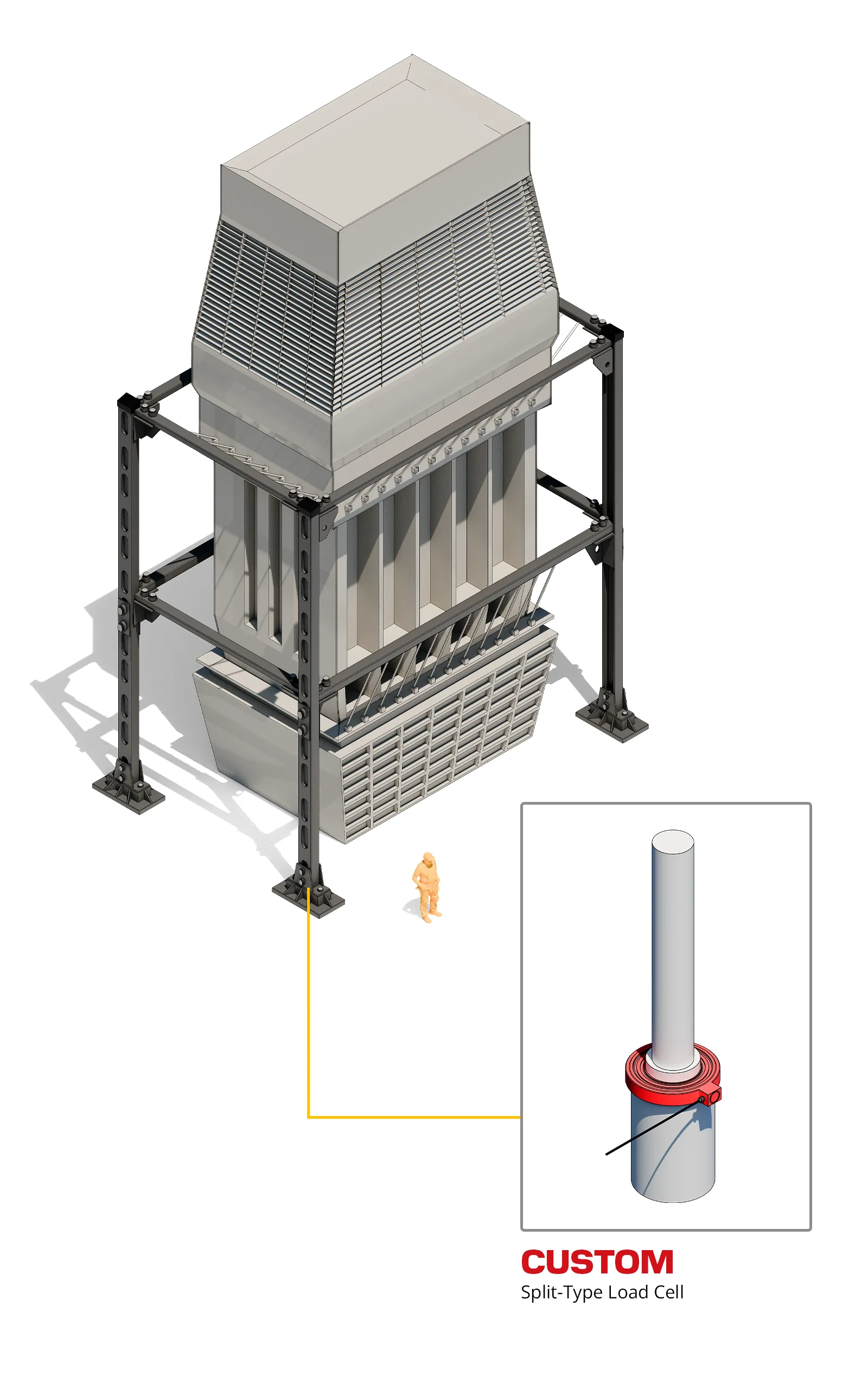
To address this, the plant introduced a real‑time load monitoring and overload prevention system. This system utilized a customized version of ANYLOAD’s 363HS to enable digital monitoring of critical production equipment in a high-temperature environment without disrupting ongoing operations.

Desafío

  1. Non-Modifiable Load-Bearing Structures: It was strictly prohibited to dismantle, cut, reweld, or perform any work that would alter the original mechanical integrity of the furnace support structures.
  2. Incompatibility of Conventional Sensors: Traditional ring-type load cells typically require the load-bearing element to pass through the sensor body. Installing such sensors would require removing/lifting the furnace support structures, which was strictly prohibited.
  3. Extreme Heat Constraints: The installation area is exposed to intense radiant heat from the smelting process. This application requires load cells designed for reliable performance in high-temperature environments.

Solución

  1. Clamp-On Design: The load cell design consisted of two semi-circular halves that clamped directly around the existing support column. This approach eliminated the need for through-hole installation or disassembly of the load-bearing structures.
  2. High-Strength Bolted Fastening: Bolted connections securely lock the two halves of the load cell onto the column. On-site installation does not require any changes to the furnace support structures.
  3. Heat-Resistant Design: The load cell’s materials and sealing processes were specifically designed for smelting environments. This ensures high signal stability under high heat radiation (up to 150 °C), with the possibility to configure additional thermal protective layers as needed.

Conclusión

ANYLOAD’s custom split-type load cell enabled real-time structural monitoring without modifying or dismantling existing furnace support structures. Continuous load measurement with overload early-warning capability further enhanced operational safety. This allowed a more proactive approach to risk management and improved the long-term structural reliability of the smelting furnaces.

363YH-Furnice-WEB
363HS-Load-Cell-WEB

Palabras clave: Non-Destructive Retrofit, High Temperature, Structural Health Monitoring, SplitType Load Cells, Smelting Furnace

Productos destacados

363HSAN
Célula de carga de compresión
Véase la versión estándar.

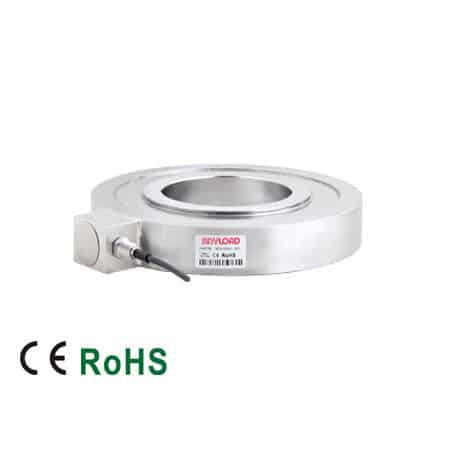
The ANYLOAD 363HSAN Compression Load Cell is a heavy-duty through-hole compression load cell designed for high-capacity force measurement where a structural element must pass through the sensor body. Its annular design allows bolts, threaded rods, anchor cables, or shafts to pass through the center of the load cell while compressive force is transferred through the surrounding bearing surface. Manufactured from stainless steel with a fully welded IP68 seal, the 363HSAN is engineered for reliable long-term performance in demanding environments including outdoor construction sites, industrial facilities, and structural monitoring installations. The model is available in a 60t rated capacity, making it suitable for high-load measurement and monitoring applications.

Explorar casos prácticos

Un carro de fertilizantes utilizando la célula de carga de viga de un solo extremo 563YS de Anyload.

Soluciones de pesaje agrícola

Cómo utiliza la industria agrícola nuestra célula de carga para carros y equipos móviles para obtener un resultado óptimo

Aumentar la vida útil de la turbina

Solución gravimétrica de garantía de calidad para estudios de palas de aerogeneradores

Células de carga para máquinas llenadoras de bolsas

Sistema de pesaje y control del llenado de bolsas y otros procesos para lograr la máxima eficacia

Ir arriba